Snow Leopards: Alarming Threats in Gilgit-Baltistan | Shyok Times
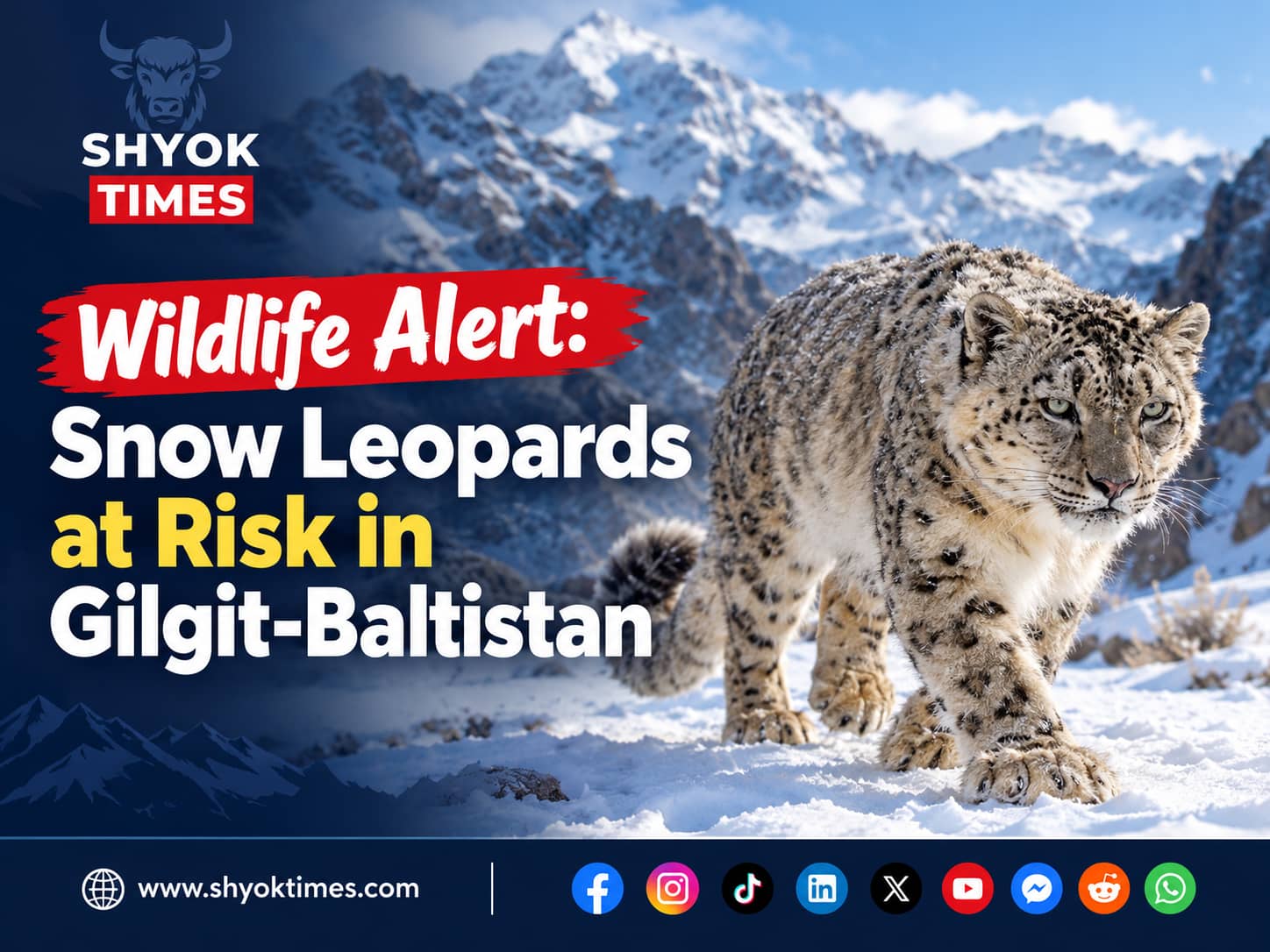
Wildlife Alert: Snow Leopards at Risk in Gilgit-Baltistan
GILGIT: Snow leopards in Gilgit-Baltistan are facing growing threats from poaching, habitat destruction, climate change, declining wild prey and retaliatory killings, raising concerns about the long-term survival of one of Pakistan’s most iconic mountain species.
Experts and wildlife conservationists have warned that inadequate population monitoring, limited protection measures and increasing human-wildlife conflict are placing additional pressure on the elusive big cat. Gilgit-Baltistan contains a major share of Pakistan’s snow leopard habitat, making the region critical to the species’ future.
The concerns were highlighted around International Day of the Snow Leopard, observed annually on October 23. The United Nations recognises the snow leopard’s ecological importance and calls for greater international cooperation to protect the species and its mountain habitats. UN International Day of the Snow Leopard.
Snow Leopard Population in Pakistan: What the Research Shows
A scientific study conducted by the Snow Leopard Foundation (SLF) estimated that Pakistan had approximately 167 snow leopards based on research carried out between 2010 and 2019, according to reporting by Dawn. The findings provided a scientific population estimate using systematic research methods rather than relying solely on earlier assumptions.
The study involved extensive camera trapping and genetic sampling across a large area of potential habitat. Researchers used these methods to improve understanding of the species’ distribution and population in Pakistan.
However, the estimate reflects research conducted over a defined historical period and should not be interpreted as a verified count of the animals currently alive in the country. Updated, repeated surveys are necessary to establish population trends and measure the effectiveness of conservation programmes.
The snow leopard, scientifically known as Panthera uncia, inhabits the high mountain ranges of Central and South Asia. In Pakistan, its habitat includes the Karakoram and Hindu Kush mountain systems, including areas of Gilgit-Baltistan.
The species plays an important role in maintaining ecological balance by helping regulate populations of wild herbivores and serving as an indicator of mountain ecosystem health.
Major Threats Facing Snow Leopards in Gilgit-Baltistan
Retaliatory Killings and Human-Wildlife Conflict
Conflict between snow leopards and livestock owners remains one of the most serious conservation challenges in northern Pakistan.
Pastoral communities depend on sheep, goats, yaks and other livestock for their livelihoods. When a snow leopard attacks animals kept in mountain pastures or poorly protected enclosures, families can suffer substantial financial losses.
In some cases, livestock owners retaliate by shooting predators or poisoning carcasses. These killings can be particularly damaging to a species that naturally occurs at low densities and requires extensive areas to survive.
Residents of Hisper Nagar, a known snow leopard habitat, have expressed concern about the absence of adequate local protection arrangements. Shepherds and other residents who regularly visit remote grazing grounds have also reported observing fewer snow leopards over time.
Such observations are important sources of local knowledge, but systematic field surveys are needed to determine the scale of any population decline.
Illegal Hunting and Wildlife Trafficking
Illegal hunting poses another significant threat to snow leopards in Gilgit-Baltistan.
Experts have warned that some animals are killed for their skins and bones, which can be sold through illegal wildlife markets. Their body parts have historically been sought for decorative purposes and certain traditional medicine practices.
Poaching is difficult to measure accurately because killings may occur in remote mountain areas and go unreported. Limited surveillance, difficult terrain and gaps in enforcement can make it harder for authorities to identify offenders and prevent wildlife trafficking.
Strengthening wildlife law enforcement, investigating reported killings and improving cooperation with local communities are essential steps towards reducing these risks.
Declining Natural Prey Populations
Snow leopards depend on wild mountain animals for food. Their prey in Gilgit-Baltistan includes Himalayan ibex, blue sheep, markhor and other wild ungulates, depending on the location.
According to Gilgit-Baltistan Chief Conservator of Parks and Wildlife Zakir Hussain, declining natural prey populations are contributing to the challenges facing snow leopards.
Illegal hunting of wild herbivores reduces the food available to predators. When natural prey becomes scarce, snow leopards may be more likely to target domestic livestock or move closer to human settlements in search of food.
This can intensify conflict with pastoral communities and increase the risk of retaliatory killings.
Wildlife conservation therefore requires more than protecting the snow leopard alone. Authorities must also conserve prey species, safeguard their habitats and enforce restrictions on illegal hunting.
Climate Change and Habitat Degradation
Climate change is adding further pressure to fragile mountain ecosystems.
Changing weather patterns, reduced snow cover in some periods, snow drought, shifting vegetation and changes in water availability can affect the distribution of wildlife and the quality of mountain habitats.
As environmental conditions change, snow leopards and their prey may face shifts in suitable habitat and food availability. The exact effects vary across locations and require long-term ecological monitoring.
Habitat degradation associated with human activity can compound these pressures. Roads, mining operations, fences and tourism infrastructure may fragment landscapes, disturb wildlife and interfere with movement between suitable habitats.
Conservation planning should therefore consider both climate-related changes and the cumulative impact of development in sensitive mountain areas.
Weak Monitoring and Limited Conservation Measures
Experts and environmentalists have raised concerns about insufficient scientific monitoring and the need for stronger, long-term conservation programmes in Gilgit-Baltistan.
Without regular surveys, wildlife authorities cannot reliably determine whether snow leopard populations are increasing, declining or remaining stable in individual valleys.
Local residents have also called attention to gaps in protection arrangements in known habitats, including Hisper Nagar.
Effective conservation requires reliable population data, trained wildlife staff, adequate funding, enforcement of existing laws and collaboration among government departments, researchers, conservation organisations and local communities.
The absence of verified, regularly updated information can make it difficult to direct limited resources towards the areas facing the greatest threats.
Government Acknowledges Human-Induced Pressures
Zakir Hussain, chief conservator of parks and wildlife in Gilgit-Baltistan, has identified human-wildlife conflict, retaliatory killings, habitat fragmentation and declining prey populations as major factors affecting snow leopards.
He has also pointed to climate-related changes as an additional pressure on the species.
According to Hussain, some areas where wildlife protection has been effective and natural prey populations have increased are showing positive trends in snow leopard populations. These observations underline the potential benefits of sustained conservation action.
He said the department had been working for the past six to seven years to establish a mechanism to compensate livestock owners for losses caused by snow leopard attacks.
A well-designed compensation programme could help reduce retaliatory killings by easing the financial burden on affected households. For such a mechanism to succeed, it needs transparent eligibility rules, timely payments, reliable verification and adequate funding.
How Can Snow Leopards Be Protected?
Experts and conservation organisations emphasise that protecting snow leopards requires a coordinated approach that addresses both wildlife conservation and the needs of mountain communities.
Key measures include:
- Strengthening scientific monitoring: Conduct repeated camera-trap surveys, genetic studies and other scientifically appropriate assessments to establish reliable population trends.
- Protecting natural prey: Prevent illegal hunting of ibex, blue sheep and other wild animals that sustain snow leopards.
- Reducing livestock losses: Improve livestock enclosures, support predator-resistant corrals and introduce practical measures to protect animals in remote pastures.
- Supporting affected communities: Develop transparent compensation or livestock-insurance schemes that reduce the financial consequences of predator attacks.
- Preventing poaching: Strengthen enforcement, investigate reported killings and improve community-based reporting of illegal wildlife trade.
- Planning development responsibly: Assess the environmental impacts of roads, mining and tourism projects before development takes place in sensitive habitats.
- Expanding public awareness: Work with schools, local organisations, shepherds and tourism operators to promote coexistence with wildlife.
The Snow Leopard Foundation describes its conservation work as combining scientific research, education, community engagement and measures to reduce conflict between people and carnivores. Such approaches can help align wildlife protection with the livelihoods of communities living in mountain ecosystems.
The Snow Leopard Trust’s Pakistan programme also provides information on habitat protection and conservation initiatives in the country.
Why Snow Leopard Conservation Matters for Gilgit-Baltistan
Snow leopards are more than a symbol of the northern mountains. Their survival is closely linked to the condition of the wider ecosystems in which they live.
Healthy mountain habitats support wild prey, biodiversity and the ecological processes on which local communities depend. Protecting these landscapes can also help preserve the natural heritage that makes Gilgit-Baltistan important for nature-based tourism and future generations.
Local communities must be part of conservation decisions because shepherds and residents often have direct experience of wildlife movements, livestock losses and changes in the environment. Their knowledge, combined with scientific research, can help authorities identify emerging problems and develop practical solutions.
Conservation programmes are more likely to succeed when people see tangible benefits, receive support after livestock losses and have meaningful opportunities to participate in wildlife management.
Conclusion
The growing threats facing snow leopards in Gilgit-Baltistan highlight the need for stronger wildlife protection, reliable population monitoring and practical support for mountain communities.
The historical estimate of 167 snow leopards in Pakistan underscores the importance of understanding the species through scientific research, while the challenges identified by experts demonstrate the need to protect natural prey, prevent poaching and reduce conflict between predators and livestock owners.
Long-term survival will depend on sustained government action, responsible development, conservation partnerships and community participation. Protecting the snow leopard is ultimately part of protecting the fragile mountain ecosystems and natural heritage of Gilgit-Baltistan.
External Resources (DoFollow):
Keep reading via DAWN: Snow leopards face growing threats in GB