Gilgit-Baltistan Cabinet: Key Moves | Shyok Times
Gilgit-Baltistan Cabinet Decisions 2026: Major Moves
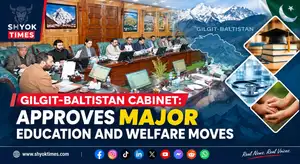
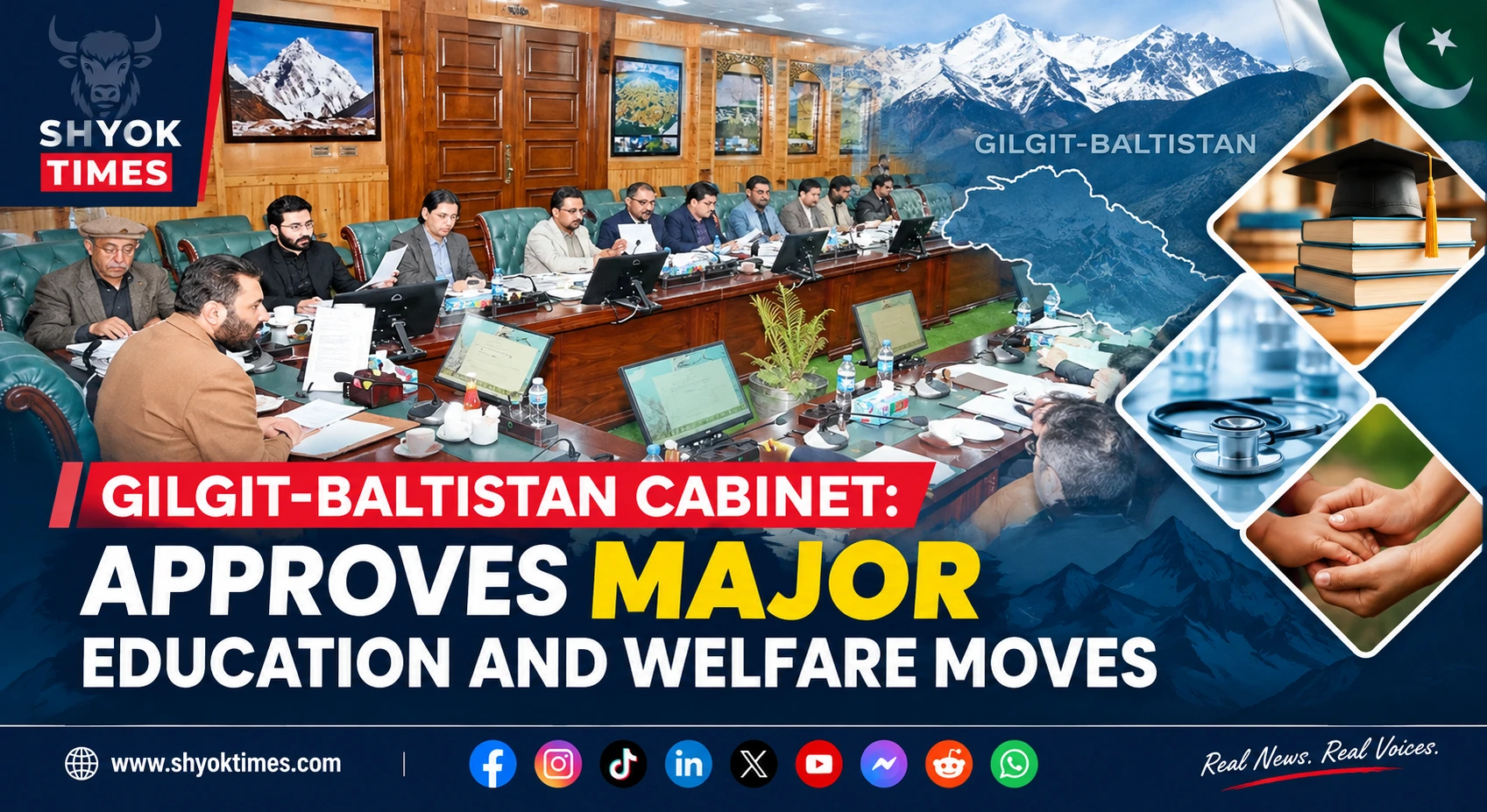
The Gilgit-Baltistan Cabinet Decisions 2026 include Rs. 271.1 million in compensation for damage to public property, a Rs. 220 million grant for Cadet College Skardu, proposed child-marriage legislation and a series of reforms covering education, healthcare, minerals and regional development. The decisions were taken at the provincial Cabinet’s fourth meeting, chaired by Chief Minister Amjad Hussain on October 20, 2026.
The meeting placed a renewed spotlight on the proposed Child Marriage Restraint Bill 2026, which the Cabinet recommended for introduction in the Gilgit-Baltistan Assembly. The government also reviewed assistance for flood-affected families, teacher regularisation, healthcare access in remote areas and measures intended to strengthen financial accountability.
According to reports published on October 21, the Cabinet approved a broad package of administrative and public-welfare measures. However, several proposals still require further assessment, legislative consideration or implementation by the relevant departments.
Gilgit-Baltistan Cabinet Decisions 2026: Key Highlights
The major decisions and proposals include:
- Rs. 271.1 million: Compensation for damage to public property during the March 1, 2026 incidents.
- Rs. 220 million: Grant approved for Cadet College Skardu.
- Child protection: Recommendation to introduce the Child Marriage Restraint Bill 2026 in the Assembly.
- Public education: Approximately Rs3 billion in government grants for public schools, with a proposed focus on performance and results.
- Healthcare: Measures to improve access to MRI services in Diamer and Baltistan.
- Regional development: Establishment of the Diamer Development Authority and expansion of the Gilgit Development Authority’s jurisdiction.
- Employment and welfare: Regularisation of teachers serving under specified education programmes and continuation of assistance for children of deceased government employees.
These measures address different public needs, but their impact will depend on funding arrangements, legal approvals, transparent implementation and effective monitoring.
Child Marriage Restraint Bill 2026 Moves Towards the Assembly
One of the most significant social-policy developments from the meeting was the Cabinet’s recommendation to introduce the Child Marriage Restraint Bill 2026 in the Gilgit-Baltistan Assembly.
The proposal has attracted attention because previous attempts to advance the legislation did not complete the legislative process. Its renewed consideration presents an opportunity for lawmakers to examine the legal safeguards available to children and consider measures to prevent underage marriages.
The Cabinet’s recommendation is an important procedural step, but it does not mean the bill has become law. Its progress will depend on the next stages of the legislative process, including formal introduction, debate and any required voting or approval.
Why the proposed legislation matters
Child marriage can interrupt education, restrict personal choices and expose children to serious health, social and economic risks. Girls are particularly vulnerable to the consequences of early marriage, including reduced opportunities to continue schooling and greater exposure to pregnancy-related health complications.
Effective legislation generally requires clear definitions, enforceable safeguards, accessible reporting mechanisms and appropriate support for affected children. Legal measures also work best when accompanied by education, community awareness, social protection and access to services.
For Gilgit-Baltistan, the proposed bill raises an important question: can the legislative process translate a Cabinet recommendation into practical and enforceable protections?
The Assembly’s consideration of the proposal will be the next important indicator of progress. Until the bill completes the required process, its provisions and legal status should not be treated as final.
Rs. 271.1 Million Approved for Public Property Damage
The Cabinet approved Rs. 271.1 million in compensation for damage to public property during the incidents of March 1, 2026.
The decision concerns public assets damaged during the incidents. The Chief Minister also directed the relevant authorities to assess damage to private property so that the government can decide whether additional assistance should be provided to affected individuals.
This distinction is important: compensation for public property has been approved, while potential assistance for private property owners remains subject to assessment and a subsequent government decision.
What affected residents need to know
A damage assessment can help authorities establish the scale of losses, identify eligible claimants and determine the resources needed for rehabilitation. For private property owners, a clear process would help explain what evidence is required, how assessments will be conducted and when decisions may be expected.
The Cabinet’s direction creates a basis for further review, but it does not establish a confirmed payment amount or a payment schedule for private property owners.
Transparent documentation, published eligibility criteria and a reliable grievance process would help ensure that any future assistance reaches eligible people fairly.
Rs. 220 Million Grant Approved for Cadet College Skardu
The Cabinet approved a grant of Rs. 220 million for Cadet College Skardu, placing education among the meeting’s major funding priorities.
The grant comes alongside a broader discussion of public-school financing, teacher employment and alternative arrangements for operating government schools.
The approval is a significant financial commitment, although the specific expenditure plan and measurable outcomes should be assessed against the college’s operational and educational needs.
Public-school grants linked to performance
The Chief Minister said the provincial government was providing approximately Rs. 3 billion in grants for public-sector schools. He directed officials to link future grants to school performance and educational results and called for a policy that would help schools become financially sustainable.
A performance-linked funding model could encourage stronger financial management and improve attention to learning outcomes. However, its effectiveness would depend on how performance is measured and whether schools receive fair assessments.
Schools in remote communities may face challenges that are different from those in better-connected urban centres. Teacher shortages, transport difficulties, limited facilities and restricted access to learning materials can affect results even when school staff are working hard.
A fair funding framework should therefore consider student progress alongside local conditions, enrolment, staffing, infrastructure and the needs of disadvantaged learners.
Ten government schools in Shigar
The Cabinet also endorsed an agreement under which 10 government schools in Shigar would operate with support from the private sector.
Such partnerships can potentially provide additional management capacity and support service delivery. Their success, however, should be judged by measurable improvements in attendance, teaching quality, learning outcomes and equitable access.
Public authorities will need to maintain appropriate oversight so that the arrangement serves students and communities while protecting the public interest.
Teacher Regularisation and Employee Welfare
The Cabinet approved the regularisation of teachers working under the School Education Programme (SEP), Basic education programmes and the National Commission for Human Development (NCHD), as described in the meeting reports.
The decision is relevant to teachers whose employment status has remained dependent on programme-based arrangements. Regularisation can offer greater employment stability, although the detailed terms, eligibility requirements and implementation timetable need to be clarified by the relevant authorities.
Stable employment arrangements can also contribute to continuity in classrooms, particularly in areas where recruiting and retaining qualified teachers is difficult.
Assistance for children of deceased government employees
The Cabinet rejected a proposal to discontinue the Chief Minister’s Assistance Package for children of deceased government employees.
Instead, it directed that the package should continue.
The decision preserves an existing welfare measure for eligible families. For households that lose a government-employed parent, assistance can be an important source of support during a financially difficult period.
The practical value of the decision will depend on timely processing, clear eligibility rules and reliable delivery of the benefits available under the package.
Healthcare Access: MRI Services in Diamer and Baltistan
Improving access to healthcare in remote areas was another important issue discussed at the meeting.
The Chief Minister directed the Health Department to ensure implementation of the Health Endowment Policy and to contact the Sindh government about the possibility of free medical treatment for underprivileged patients from Gilgit-Baltistan.
He also instructed the Health Secretary to take steps towards providing MRI services in Diamer and Baltistan.
Why diagnostic services matter
Magnetic resonance imaging, commonly known as MRI, is used to help clinicians investigate a range of conditions affecting the brain, spine, joints and other parts of the body.
When advanced diagnostic facilities are unavailable locally, patients may need to travel to larger cities for investigations. Such journeys can increase transport costs, delay diagnosis and create additional difficulties for patients who are already facing financial hardship.
Providing MRI services closer to underserved communities could reduce some of these barriers. However, establishing a functioning service requires more than purchasing equipment. Facilities need trained staff, maintenance arrangements, reliable electricity, appropriate clinical protocols and sustainable operating budgets.
The Cabinet’s direction signals an intention to address the issue, but the availability of operational MRI facilities will depend on subsequent planning, financing and implementation.
Interest-free loans for women and young people
The Cabinet also reviewed ways to make interest-free loans offered through Akhuwat more accessible to women and young people.
A special committee was formed to review the lending agreement.
Accessible financing can help aspiring entrepreneurs establish small businesses, purchase equipment or expand income-generating activities. Women and young people in remote communities may face additional barriers when trying to access conventional financial services.
A review of the programme’s terms could help identify obstacles in application procedures, eligibility criteria, outreach and loan processing. Any improvements should preserve responsible lending practices and ensure that applicants receive clear information about the terms of the programme.
Livestock, Minerals and Revenue Administration Reforms
The Cabinet approved the Gilgit-Baltistan Livestock Bill 2026 for submission to the Provincial Assembly. It also endorsed the Gilgit-Baltistan Population Policy 2026–36.
The livestock proposal is relevant to a region where animal husbandry supports household livelihoods and contributes to local economic activity. A legislative framework can provide a basis for addressing animal health, disease prevention and related regulatory responsibilities, subject to the final text and its approval.
The Cabinet also recommended the Gilgit-Baltistan Animals Bill 2026 for introduction in the Assembly, according to published reports. The relationship between the reported livestock and animals bills should be clarified through the official legislative record before their titles or scope are treated as interchangeable.
Stronger oversight of mineral resources
The Cabinet approved granting magisterial powers to assistant directors in the Mines and Minerals Department.
The stated objective is to strengthen oversight and enable action against violations under the applicable legal framework. The effectiveness of these powers will depend on the precise authority granted, procedural safeguards, staff capacity and accountability mechanisms.
Mineral resources are economically important, but their regulation also involves public revenue, environmental protection, workplace safety and the rights of affected communities.
Effective enforcement should therefore combine lawful action against violations with transparent procedures and appropriate oversight.
Revenue administration and policy coordination
The Cabinet approved the establishment of a Policy Board and the creation of an advisory council under amendments to the Gilgit-Baltistan Revenue Authority Act 2026.
These institutional arrangements are intended to strengthen policy coordination and revenue administration. Their practical value will depend on clearly defined responsibilities, competent membership, transparent decision-making and effective follow-up.
Institutional reforms produce meaningful results when they improve the consistency of decisions, clarify accountability and support better public services.
Diamer Development Authority and Other Regional Measures
The Cabinet approved the establishment of the Diamer Development Authority and District and Divisional Development Review Committees.
It also approved extending the jurisdiction of the Gilgit Development Authority to adjoining suburban areas.
Development authorities and review committees can help coordinate planning, infrastructure priorities and implementation across administrative boundaries. Their performance should be measured by tangible improvements rather than the creation of institutions alone.
Clear mandates, adequate staffing, realistic budgets and transparent project selection will be important to their success.
Alternative land for flood-affected families
The Cabinet approved the transfer of ownership of alternative land to flood-affected residents of Tali Das in Ghizer district.
For families whose homes or land have been affected by flooding, secure replacement land can support recovery and provide a foundation for rebuilding their lives.
Implementation will require clear ownership documentation, identification of eligible families and resolution of any outstanding land-record issues. Authorities should also consider safety, access to essential services and exposure to future hazards when planning relocation or replacement land arrangements.
Agriculture and irrigation
The Cabinet also approved the release of funds for rehabilitation of the Gini Das and Gureekot irrigation channels in Astore district, according to published reporting.
Reliable irrigation infrastructure can support agricultural production and reduce disruption for farming communities. Timely rehabilitation, appropriate engineering and ongoing maintenance will be essential to ensure that public spending produces lasting benefits.
Financial Discipline and Accountability
The Chief Minister directed government departments to obtain approval from the relevant forum before starting development projects or creating financial liabilities. He also said financial irregularities would not be tolerated.
These instructions underline an important principle of public administration: government spending should follow established approval procedures, budgetary controls and applicable legal requirements.
Effective financial oversight helps reduce the risk of unauthorised expenditure and improves the ability of officials and citizens to track how public funds are used.
The next step is implementation. Departments must translate broad instructions into clear procedures, documented approvals, timely reporting and appropriate action when rules are breached.
What Happens Next?
The Cabinet’s decisions now move along different administrative and legislative paths.
The Child Marriage Restraint Bill 2026 and other proposals recommended for the Assembly require further legislative consideration. Approved grants and compensation measures must proceed through the relevant financial and administrative processes. Directions concerning healthcare, private-property damage assessments and institutional reforms require follow-up by the responsible departments.
For residents, the most important questions concern delivery: when approved funding will be released, how eligible beneficiaries will be identified, whether new services will become operational and whether proposed legislation will advance.
The government’s progress should be evaluated through official notifications, budget releases, implementation reports and legislative records rather than announcements alone.
Conclusion: Will Cabinet Decisions Deliver Results?
The Gilgit-Baltistan Cabinet Decisions 2026 cover several areas with direct consequences for residents, from compensation and education funding to healthcare access, employment stability and regional development.
The renewed push for the Child Marriage Restraint Bill 2026 is particularly significant because it places child protection back on the legislative agenda. Meanwhile, the Rs. 220 million grant for Cadet College Skardu, Rs. 271.1 million in compensation for public property damage and directions concerning schools and healthcare represent substantial commitments that require careful implementation.
The real test will be whether these decisions translate into timely assistance, better public services, accountable spending and stronger legal protections.
For the people of Gilgit-Baltistan, the success of the Cabinet meeting will ultimately be measured not by the number of approvals announced, but by the improvements they can see in their daily lives.
Shyok Times | News Desk
Reporting on Gilgit-Baltistan, public policy and the issues that matter to local communities.