Shigar Valley: Discover Gilgit-Baltistan’s Hidden Gem | Shyok Times
Shigar Valley: The Gateway to K2 Adventures
Shigar Valley in Gilgit-Baltistan, Pakistan, is a remarkable destination where centuries-old Balti heritage, fertile fruit orchards, glacial rivers and the towering Karakoram Mountains come together. Located approximately 30–32 kilometres from Skardu, the valley offers visitors a combination of cultural discovery, peaceful landscapes and access to some of the world’s most challenging trekking and mountaineering routes.
Known for its historic Shigar Fort, traditional Balti settlements and spectacular journey towards Askole, the Baltoro Glacier and K2, Shigar Valley appeals to families, photographers, history enthusiasts and adventure travellers alike. Its landscape changes from green agricultural terraces and fruit gardens to rugged mountain terrain as visitors travel deeper into the valley.
For travellers exploring Gilgit-Baltistan, Shigar is more than a stop on the way to the Karakoram. It is a destination with its own history, traditions, agricultural identity and natural beauty.
Shigar Valley at a Glance
- Location: Gilgit-Baltistan, northern Pakistan
- Nearest major city: Skardu
- Main settlement: Shigar town
- Approximate elevation: 2,300 metres above sea level
- Famous landmark: Shigar Fort, also known as Fong Khar
- Local language: Balti
- Natural attractions: Shigar River, orchards, mountain landscapes and Jarba Zhou Lake
- Adventure gateway: Askole, Baltoro Glacier and K2 trekking routes
- Recommended visit: Two to five days for the lower valley; longer for trekking expeditions
Where Is Shigar Valley Located?
Shigar Valley lies in the Baltistan region of Gilgit-Baltistan, northern Pakistan, to the north of Skardu. The road from Skardu crosses the Indus River corridor before entering a landscape of rocky slopes, river terraces, traditional villages and cultivated fields.
The valley follows the Shigar River, which drains glacially fed mountain catchments and eventually joins the Indus near Skardu. As the road continues northward, the scenery gradually changes from orchards and settled agricultural land to narrower valleys, high pastures and rugged mountain approaches.
According to the Gilgit-Baltistan Tourism Department, Shigar is an important gateway to the Karakoram and the starting region for expeditions to some of the world's highest peaks.
The wider valley corridor extends towards Askole, the last permanent settlement on the classic approach to the Baltoro Glacier. From there, trekkers travel into increasingly remote terrain on their way towards Concordia and K2.
1. Shigar Fort: A Remarkable Piece of Balti Heritage
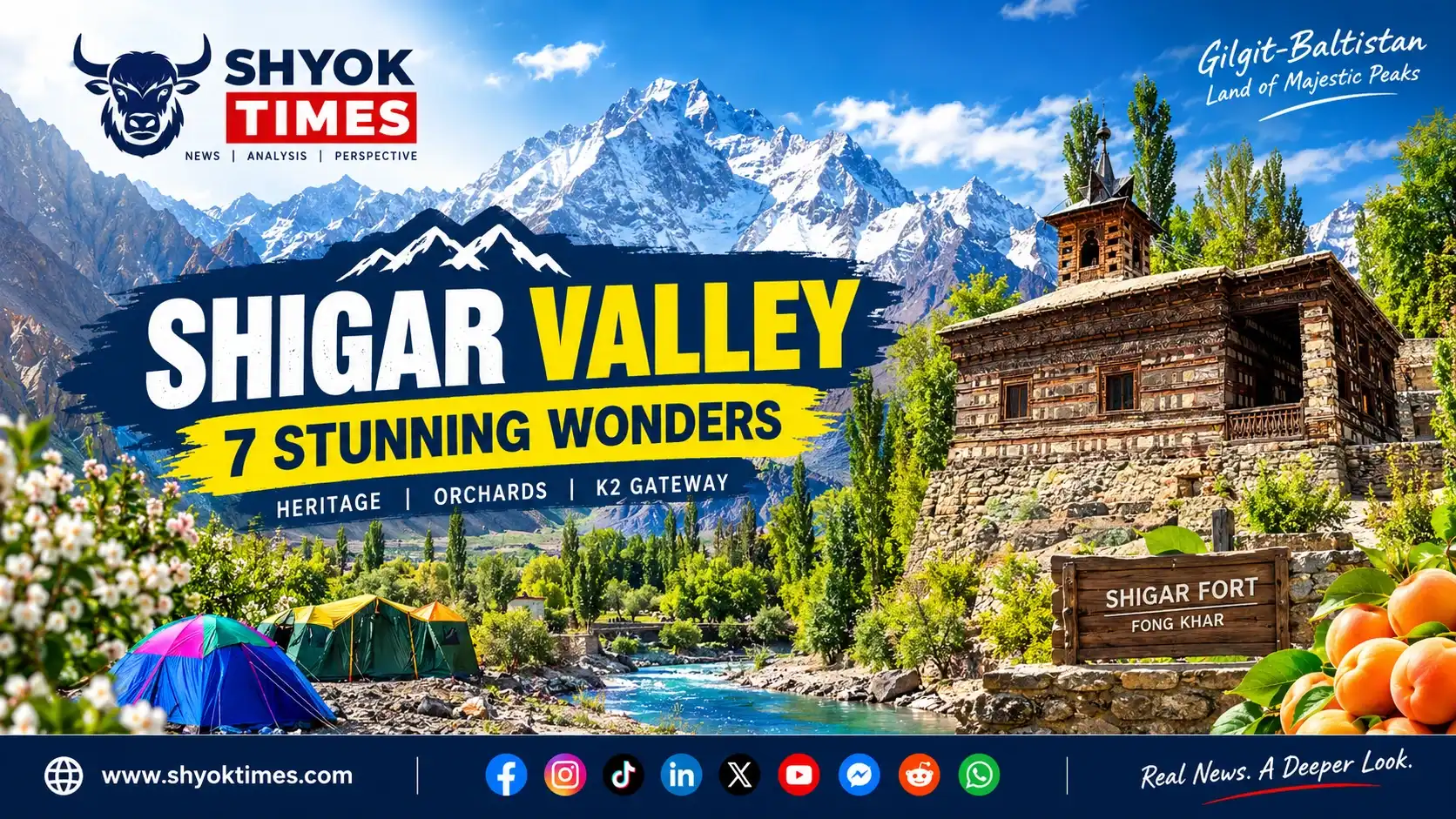
Shigar Fort is among the most recognisable historical landmarks in Gilgit-Baltistan. Locally known as Fong Khar, commonly translated as “Palace on the Rock,” the fort dates to the seventeenth century and is associated with the Amacha ruling dynasty of Shigar.
Built using traditional stone, timber and other locally available materials, the historic complex reflects the architectural traditions and political history of Baltistan. Its position above the surrounding settlement and orchards makes it a distinctive feature of the valley.
The fort underwent a major conservation and restoration programme led by the Aga Khan Cultural Service Pakistan in collaboration with local stakeholders. Today, it functions as a heritage property and hotel, allowing visitors to experience historic Balti architecture alongside contemporary hospitality.
Visitors can explore the fort's architectural features, traditional woodwork, courtyards and gardens, subject to access arrangements. The surrounding landscape provides opportunities for photography, particularly in the softer light of early morning and late afternoon.
Shigar Fort also demonstrates how heritage conservation can support tourism while preserving the identity of a historic building.
For further information about the property and accommodation, visit the official Serena Shigar Fort website.
2. Amburiq Mosque: Preserving Centuries of History
Amburiq Mosque is another important cultural landmark in Shigar Valley. Known for its traditional wooden architecture and intricate craftsmanship, the mosque represents an important part of Baltistan's religious and architectural heritage.
Its construction techniques reflect the skills of local craftsmen, particularly the careful use of timber and traditional joinery. The structure has survived generations of changing conditions and remains significant to the local community.
The mosque received an Award of Merit in the 2005 UNESCO Asia-Pacific Heritage Awards for Cultural Heritage Conservation following a restoration project supported by the Aga Khan Cultural Service Pakistan and the local community.
The recognition highlighted the importance of conserving historic buildings while maintaining their social and cultural relevance.
Visitors interested in architecture, history and the development of religious traditions in Baltistan will find Amburiq Mosque a worthwhile stop. Visitors should respect prayer times, local customs and any restrictions on photography or entry.
The Gilgit-Baltistan Tourism Department's Amburiq Mosque guide provides additional background on the site.
3. Jarba Zhou Lake: A Peaceful Natural Attraction
Jarba Zhou, also written as Jarba Zhōu or Jarbachzoo in different descriptions, is known locally as Blind Lake. It is among the natural attractions associated with Shigar Valley and offers a quieter alternative to the region's high-altitude trekking destinations.
The lake's appeal comes from its water, surrounding greenery and mountain scenery. Depending on the season and local conditions, the landscape can provide excellent opportunities for photography, short outings and relaxation.
For visitors travelling with family or seeking a less demanding experience, a visit to the lake can complement a tour of Shigar town and its historic landmarks.
However, travellers should confirm the current road condition and local access arrangements before setting out. Activities such as boating or swimming should only be undertaken where officially permitted and considered safe. Cold water, changing weather and unfamiliar shorelines can pose risks.
The wider area also offers opportunities to appreciate the relationship between water, agriculture and settlement in this mountain environment.
4. Sarfaranga Cold Desert: A Dramatic Landscape
The Sarfaranga Cold Desert, near Skardu and within the wider Shigar region, presents a striking contrast to the green orchards and cultivated terraces found elsewhere in Baltistan.
Its pale sandy terrain, rocky surroundings and distant mountains create a landscape that looks dramatically different from the conventional image of a lush valley. This contrast is one reason the cold desert has become a recognised attraction for road trips, photography and outdoor events.
The area is also associated with jeep rallies and adventure tourism. Visitors can appreciate the desert landscape without undertaking a demanding mountain expedition, although driving should always take account of local conditions and designated routes.
For photographers, the changing light across the sand and surrounding mountains can produce distinctive images. Travellers should avoid disturbing fragile terrain and should not drive outside permitted areas.
Combining the cold desert with Shigar town and Shigar Fort can make for a varied itinerary around Skardu.
5. Shigar River and the Valley's Fruit Orchards
The Shigar River is central to the valley's landscape and agricultural life. Fed by glacial meltwater and tributaries from the upper mountain catchments, it supports irrigation across the cultivated terraces and helps sustain the orchards that characterise lower Shigar.
Apricots are among the valley's best-known products. Apple, cherry, peach, pear and walnut trees also contribute to the agricultural landscape, although the availability of particular fruits depends on the season and local growing conditions.
Spring brings blossoms to the orchards, while summer and early autumn offer opportunities to see fruit developing and being harvested. These seasonal changes give the valley a different character throughout the year.
Agriculture remains an important part of local livelihoods. For visitors, orchard walks offer a chance to see a side of Baltistan that is distinct from the region's better-known mountain expeditions.
Travellers should remain on public paths, ask permission before entering private land and avoid picking fruit without the owner's consent.
The river itself is beautiful but can be dangerous. Glacial meltwater can rise quickly, especially during warmer periods, and strong currents make approaching unstable banks or entering the water inadvisable.
6. Askole and the Route Towards K2
Shigar Valley has an international reputation as an important gateway to the high Karakoram. Its upper reaches lead towards Askole and the routes used by trekking groups and mountaineering expeditions travelling to the Baltoro Glacier.
Askole serves as a starting point for the classic trekking approach to the Baltoro region. Beyond it, the landscape becomes increasingly remote, with rough tracks giving way to demanding trails, glacier terrain and high mountain conditions.
The Baltoro route leads towards Concordia, a spectacular meeting point surrounded by some of the Karakoram's most prominent peaks. These include K2, which rises to 8,611 metres and is the world's second-highest mountain, as well as Broad Peak and the Gasherbrum peaks.
This region should not be confused with an ordinary sightseeing excursion. Reaching the Baltoro Glacier or K2 Base Camp requires substantial planning, suitable equipment, physical preparation and experienced support. Weather, altitude, glacier conditions and access restrictions can affect the journey.
Visitors who simply want to experience Shigar Valley do not need to undertake a major trek. Shigar Fort, the lower valley, orchards and nearby attractions offer plenty to explore without entering high-altitude expedition terrain.
7. Balti Culture, Traditional Life and Hospitality
Shigar's appeal extends beyond its scenery. The valley is home to Balti communities whose language, architecture, food traditions and agricultural practices form an important part of the cultural identity of Gilgit-Baltistan.
Balti is a language of Tibetan origin, and the region's cultural history reflects centuries of interaction across the mountain corridors of the wider Karakoram and adjoining areas.
Traditional houses, village settlements, irrigation channels and family orchards reveal how people have adapted to a demanding mountain environment. Water management and seasonal agriculture remain particularly important in a region where cultivated land is concentrated along river terraces.
Visitors may encounter local dishes, fresh and dried fruit, traditional crafts and everyday village life. Experiences vary by season and community, so travellers should avoid assuming that every village offers the same facilities or activities.
Responsible tourism means treating residents with respect, asking permission before photographing people or private property, purchasing local products where possible and recognising that villages are living communities rather than simply scenic backdrops.
Supporting local businesses can help ensure that tourism benefits residents as well as visitors.
Best Time to Visit Shigar Valley
The best time to visit Shigar depends on whether the priority is sightseeing, orchard photography or trekking towards the high Karakoram.
Spring: April to May
Spring brings warmer conditions to the lower valley and the possibility of seeing fruit trees in blossom. It is an appealing period for landscape photography and quieter visits to historical sites.
However, snow may remain on upper routes, and conditions beyond the main settlements can be unpredictable.
Summer: June to August
Summer is generally the main season for visiting Shigar and accessing upper mountain routes. Orchards are green, days are often suitable for outdoor activities, and trekking expeditions begin travelling towards the Baltoro region.
Glacial rivers can be high, and mountain weather remains changeable. Travellers should check local forecasts and road conditions.
Autumn: September to October
Autumn offers opportunities to see fruit harvests, changing orchard colours and clear mountain views. The lower valley may remain accessible, although the first snowfall can affect higher routes.
September is often a good choice for travellers seeking a combination of cultural sightseeing and seasonal scenery.
Winter: November to March
Winter can bring snow, freezing temperatures and difficult road conditions, particularly in the upper valley. Some routes and services may become limited.
Travellers considering a winter visit should arrange suitable transport and accommodation in advance and confirm local conditions before departure.
For most first-time visitors, June to September is a practical period to consider, but no month guarantees safe access to every attraction or trekking route.
How to Reach Shigar Valley
Shigar Valley is usually reached from Skardu by road. The journey takes roughly 30–60 minutes under favourable conditions, depending on the exact destination, traffic and road conditions.
By air
Skardu Airport is the nearest airport for travellers flying into the region. Flights, schedules and weather-related disruptions should be checked before travel.
By road
Travellers can reach Skardu by road from other parts of Gilgit-Baltistan and Pakistan, including via the Karakoram Highway route. Journey times depend on the departure point, road conditions and any delays.
Local transport
Private vehicles, hired cars and local transport can be used to visit Shigar town and nearby attractions. Travel beyond the main settlement towards Askole requires additional planning because road surfaces become rougher and conditions can change quickly.
Before leaving Skardu, confirm transport arrangements, fuel availability and the condition of the route for the intended journey.
Where to Stay and What to Eat
Shigar town is the most practical base for visitors exploring the lower valley. Accommodation options range from guesthouses and local lodgings to the restored Shigar Fort heritage hotel.
Travellers should compare facilities, current rates and location before booking. Reservations are advisable during busy summer periods, particularly for distinctive heritage accommodation.
Food options in the town and nearby guesthouses may include rice, bread, lentils and traditional Balti dishes. Seasonal fruit and dried apricots are also part of the valley's agricultural identity.
Visitors travelling into the upper valley should not assume that restaurants, shops, fuel or mobile coverage will be consistently available. Carry essential supplies and confirm arrangements before leaving populated areas.
Responsible Travel: Protecting Shigar's Natural and Cultural Heritage
Shigar's landscapes and historic buildings are valuable assets, but they also require care. Increased tourism can bring economic opportunities while placing pressure on waste management, water resources, local infrastructure and fragile mountain environments.
Visitors can help by following a few simple principles:
- Carry rubbish back to designated disposal points.
- Avoid polluting rivers, streams and irrigation channels.
- Respect private orchards, farmland and grazing areas.
- Ask permission before photographing residents or entering homes.
- Follow local guidance at heritage sites and religious buildings.
- Use qualified guides and suitable vehicles for demanding routes.
- Check weather, road and trekking conditions before travelling.
- Purchase local goods and use local services when practical.
Responsible tourism is especially important beyond the main valley, where emergency services and visitor facilities may be limited.
Frequently Asked Questions About Shigar Valley
1. What is Shigar Valley famous for?
Shigar Valley is famous for Shigar Fort, Amburiq Mosque, fruit orchards, the Shigar River, nearby natural attractions and its role as a gateway to Askole, the Baltoro Glacier and K2 trekking routes.
2. How far is Shigar Valley from Skardu?
Shigar town is approximately 30–32 kilometres from Skardu by road. The journey often takes around 30–60 minutes, depending on road conditions, traffic and the exact destination.
3. How many days are enough to explore Shigar Valley?
Two to five days can provide a comfortable introduction to Shigar town, its historical landmarks, orchards and nearby attractions. Travellers planning multi-day treks towards the Baltoro Glacier need additional time.
4. Is Shigar Valley suitable for families?
Yes. The lower valley, Shigar Fort and accessible cultural attractions can suit families. Visitors should check facilities and road conditions, take care near rivers and avoid treating rough upper-valley tracks as ordinary sightseeing roads.
5. Can tourists visit K2 from Shigar Valley?
Shigar is an important gateway for expeditions towards K2, but reaching K2 Base Camp involves a demanding multi-day trek beyond Askole. Visitors need appropriate preparation, equipment, experienced support and any required permits.
6. What is the best month to visit Shigar Valley?
June to September is a useful general period for sightseeing and many summer outdoor activities. September can be attractive for orchard scenery and harvests, although actual conditions vary from year to year.
7. Is Shigar Fort open to visitors?
Shigar Fort operates as a heritage property and hotel. Access to particular areas and facilities may depend on current arrangements, so visitors should confirm details through the official Serena Shigar Fort website before travelling.
Conclusion: Why Shigar Valley Deserves a Place on Your Travel List
Shigar Valley brings together several dimensions of Gilgit-Baltistan that are often experienced separately: living Balti culture, historic architecture, productive orchards, glacial rivers and access to the high Karakoram.
Its historic fort and Amburiq Mosque reveal the importance of preserving the region's architectural heritage. Its agricultural terraces show how communities have built livelihoods around scarce cultivable land and mountain water. Its upper routes connect visitors to one of the world's most extraordinary trekking and mountaineering landscapes.
Whether the aim is a short cultural visit from Skardu, a photography trip during the fruit season or a carefully planned expedition towards the Baltoro Glacier, Shigar offers experiences for different interests and abilities.
The valley's greatest strength is this combination of heritage, nature and everyday life. Visitors who take time to explore beyond the main road can gain a deeper appreciation of Baltistan—not merely as a gateway to famous mountains, but as a region with a distinctive identity and a heritage worth protecting.
External Resources (DoFollow):
Follow more on Visit GB: Shigar: Gateway to the Great Karakoram
Keep reading via Serena Hotels: Serena Shigar Fort