GB police recruitment fraud: 58 Arrested | Shyok Times
Gilgit-Baltistan Police Recruitment Fraud: 58 Arrested
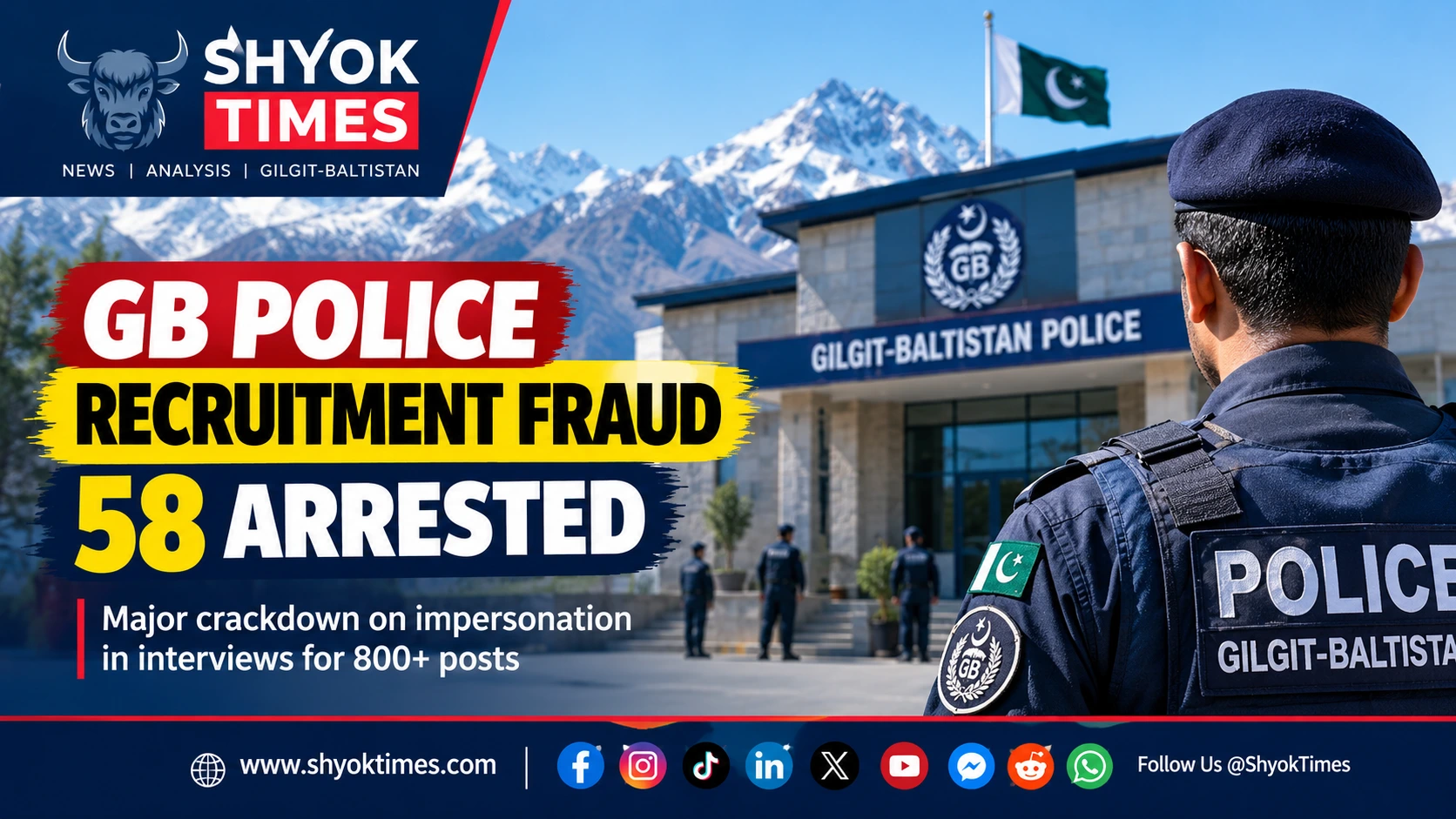
GILGIT, Gilgit-Baltistan — Authorities have arrested 58 people for allegedly impersonating shortlisted candidates during recruitment interviews for corporal and constable positions in the Gilgit-Baltistan Police, raising fresh questions about identity verification and the protection of merit in public-sector hiring.
According to a report published by Dawn on October 18, 2026, cases were registered against the suspects under Section 419 of the Pakistan Penal Code (PPC), which deals with cheating by personation. The suspects were reportedly disqualified from the recruitment process.
The arrests came as interviews for more than 2,000 shortlisted male and female candidates were being conducted at the Central Police Office in Gilgit. The recruitment drive aims to fill more than 800 vacant positions in the police department.
The Gilgit-Baltistan Police spokesperson said authorities were taking action against alleged violations and fraudulent activities without discrimination to maintain transparency, uphold merit and protect the rights of eligible candidates.
Gilgit-Baltistan Police Recruitment Fraud: What Happened?
The alleged recruitment fraud involves individuals who reportedly appeared for interviews on behalf of the actual candidates rather than presenting themselves as the applicants whose names had been shortlisted.
According to the report, candidates were invited to the interview stage after passing the written examination. The alleged impersonation was therefore a serious concern for a recruitment process intended to select applicants according to established eligibility requirements and merit.
Police officials said the suspects were taken to a police station and cases were registered against them. Their disqualification means they can no longer continue through the recruitment process under the reported decision.
However, the allegations against the arrested individuals should not be treated as final findings of guilt. The cases must proceed according to law, and the accused retain the right to due process.
The arrests also highlight the importance of checking the identity of every applicant at each stage of recruitment, particularly when a large number of candidates are competing for a limited number of government jobs.
More Than 2,000 Candidates Compete for Over 800 Posts
The recruitment drive attracted more than 2,000 shortlisted male and female applicants from across Gilgit-Baltistan. More than 800 vacancies for corporals and constables were advertised by the police department.
The scale of the process makes transparency particularly important. Every vacancy represents an opportunity for an eligible applicant, and any attempt to manipulate the process can undermine confidence among candidates who have prepared for examinations and interviews.
The interviews were being held at the Central Police Office in Gilgit. According to the police official quoted by Dawn, only candidates who passed the written examination were invited to appear before the interview panel.
The official said the recruitment process was being conducted according to merit and eligibility criteria. At the time of the report, authorities expected to issue the list of selected candidates within a few days after the interviews were completed.
The announcement of the final list is an important stage for applicants who have been waiting to learn whether they have secured a position. Candidates should rely on official police announcements and published lists rather than unverified social media posts or unofficial claims about selection.
Police Say Action Is Continuing Without Discrimination
The Gilgit-Baltistan Police spokesperson said action against those allegedly involved in violations of the law and fraudulent activities was continuing without discrimination.
The stated objective is to ensure transparent recruitment, uphold merit and protect the rights of eligible candidates. Police officials also said the measures were intended to maintain public confidence in the recruitment process.
A fair recruitment system requires more than announcing vacancies and conducting interviews. It also depends on consistent verification of documents, confirmation of applicants' identities, secure examination procedures and clear communication about selection decisions.
When alleged impersonation is detected, authorities must investigate the circumstances and determine who was involved, whether other people assisted the alleged activity and whether any additional recruitment rules were violated.
At the same time, enforcement should follow the law and apply the same standards to all applicants, regardless of their background or connections. These principles are essential to ensuring that the process remains credible.
The police statement indicates that authorities regard the alleged impersonation as a matter requiring action. Further details about the investigation, including any additional findings or measures to prevent similar incidents, were not established in the available report.
Why Section 419 of the Pakistan Penal Code Matters
The cases against the suspects were reportedly registered under Section 419 of the Pakistan Penal Code, which concerns punishment for cheating by personation.
The provision addresses circumstances in which a person cheats by pretending to be another person. The applicable legal consequences depend on the facts of the case and the proceedings before the competent authorities.
The text of the law can be consulted through the official Pakistan Code website, maintained by the Ministry of Law and Justice. Readers should consult the relevant legislation and qualified legal professionals for advice about a particular case.
In recruitment, impersonation can interfere with the verification of an applicant's identity and compromise the fairness of an assessment. If one individual appears in place of another, the interview panel may not be evaluating the person who actually qualified for the interview.
That is why identity checks are important throughout the hiring process. Officials may need to verify original identification documents, match photographs and application records, and ensure that the person attending an interview is the same individual who completed the required examination.
The reported arrests show that alleged impersonation was detected during this recruitment drive. They do not, by themselves, establish the guilt of every accused person or prove that the entire recruitment process was compromised.
A Test of Merit and Public Confidence
Government employment is an important source of livelihood for many families in Gilgit-Baltistan. Competition for limited vacancies can be intense, making the integrity of selection procedures a significant public concern.
For candidates who meet the eligibility criteria, prepare for written examinations and attend interviews themselves, an attempt to secure a position through impersonation could create an unfair disadvantage.
Transparent recruitment is therefore important not only for the applicants but also for the police department. Public institutions depend on confidence that appointments are made through lawful and consistent procedures rather than deception or preferential treatment.
The latest arrests bring attention to three important responsibilities.
First, recruitment authorities must verify candidates' identities at every critical stage. A strong verification process can help identify discrepancies before they affect selection decisions.
Second, investigations into alleged fraud must be handled fairly. Authorities should establish the facts, preserve relevant evidence and allow the legal process to determine responsibility.
Third, the publication of selection results should be clear and accessible. Official lists, notices about pending vacancies and explanations of waiting-list arrangements can reduce confusion and help applicants understand their position.
These measures can strengthen confidence in recruitment even when irregularities are discovered. Detecting alleged wrongdoing is important, but the effectiveness of the response also depends on consistent enforcement, accurate records and transparent communication.
Selected Candidates and Waiting Lists in Diamer-Astore Range
Separately, a statement attributed to the Gilgit-Baltistan Police spokesperson says that the final list of selected candidates for vacant constable posts, along with waiting-list candidates, has been released for the Diamer-Astore Range.
The statement also indicates that decisions on some posts remain pending. Candidates for those vacancies are expected to be selected from the waiting list after the outstanding decisions have been made.
This update concerns the Diamer-Astore Range and should be distinguished from the broader report about arrests during recruitment interviews in Gilgit. The available information does not establish that the released list is connected to the alleged impersonation cases or that the arrests changed the selection outcome for that range.
Applicants should check the relevant official notification to confirm the positions covered, the status of pending vacancies and the procedure for candidates on the waiting list. The exact notification date, the number of candidates on the list and the posts awaiting decisions were not specified in the supplied statement.
Where a final selection list has been issued, candidates should follow the instructions contained in the official notice. Those awaiting a decision should avoid assuming that a place on the waiting list guarantees appointment, as selection depends on the applicable rules and the availability of vacancies.
What Candidates Should Know
Candidates participating in the Gilgit-Baltistan Police recruitment process should keep their application details and identification documents available and follow instructions issued by the relevant recruitment authorities.
Applicants should also verify their results through official channels. Unconfirmed lists, screenshots and forwarded messages can contain outdated or inaccurate information, especially when decisions on some posts remain pending.
Anyone who believes that their application or selection status has been affected by an irregularity should use the complaint or inquiry mechanism specified by the department. Supporting documents and a clear account of the concern can help authorities assess a complaint.
Candidates should not pay intermediaries who promise guaranteed selection or claim that they can alter results. Recruitment outcomes should be determined through the prescribed process, and suspicious requests for money or offers to impersonate applicants should be reported to the appropriate authorities.
For the police department, the current case presents an opportunity to reinforce safeguards across the recruitment process. Clear identity-verification procedures, consistent documentation and timely publication of results can help protect both applicants and the credibility of the institution.
What Happens Next?
The next key developments are the progress of the cases registered against the suspects, any further official information about the investigation and the publication or confirmation of recruitment results for the relevant vacancies.
According to the report published by Dawn, police officials expected the selection list for the broader recruitment drive to be issued within a few days after the interview process concluded. That was the expectation reported at the time; candidates should confirm the current status through official notices.
The separately reported Diamer-Astore Range list also requires careful attention to the distinction between selected candidates, waiting-list applicants and posts for which decisions remain pending.
The police department's stated commitment is to enforce the law without discrimination and preserve merit. Whether applicants and the wider public remain confident in the process will depend on the consistency of those measures, the handling of the cases and the clarity of the final recruitment decisions.
For now, the reported arrests serve as a reminder that identity verification and fair selection procedures are central to public-sector recruitment. Eligible candidates deserve a process in which applications are assessed according to the rules, alleged fraud is investigated lawfully and selection decisions are communicated accurately.
Frequently Asked Questions
How many people were arrested in the Gilgit-Baltistan Police recruitment case?
A report published by Dawn on October 18, 2026, says 58 people were arrested for allegedly appearing as other candidates during recruitment interviews. A separately supplied Urdu statement gives the figure as 34, so the discrepancy remains unresolved.
Which law was invoked against the suspects?
According to the report, cases were registered under Section 419 of the Pakistan Penal Code, which concerns cheating by personation.
How many police vacancies were advertised?
The reported recruitment drive covers more than 800 vacancies for corporal and constable positions.
How many candidates were shortlisted for interviews?
More than 2,000 male and female candidates were reportedly shortlisted for interviews at the Central Police Office in Gilgit.
Has the Diamer-Astore Range selection list been released?
A statement attributed to the GB Police spokesperson says the final list of selected candidates and waiting-list candidates for vacant constable posts in the Diamer-Astore Range has been released. Some posts remain pending, with selection from the waiting list expected after the outstanding decisions.
Have the arrested suspects been convicted?
The available report describes arrests and registered cases, not convictions. Guilt must be determined through the applicable legal process.
External Resources (DoFollow):
Follow more on DAWN: 58 arrested in Gilgit-Baltistan police recruitment fraud