Amchi Medicine in Baltistan: Ancient Healing | Shyok Times
Amchi Traditional Medicine in Baltistan: Preserving an Ancient Himalayan Healing Tradition
Amchi traditional medicine in Baltistan is an important part of the region's cultural heritage, reflecting generations of knowledge about medicinal plants, traditional healing practices and the relationship between people and their mountain environment. Closely associated with the wider Tibetan medical tradition known as Sowa Rigpa, Amchi medicine has historically played a role in community life across parts of the Himalayan region.
In Baltistan, where towering mountains, remote settlements and harsh winters have shaped everyday life, traditional healers have long been remembered for their knowledge of local plants and customary approaches to illness and physical discomfort.
As modern healthcare expands, preserving this knowledge has become an important cultural question. How can the experience of older generations be documented, local medicinal plants be protected, and traditional practices be studied responsibly without confusing cultural value with proven medical effectiveness?
The answer lies in respectful documentation, scientific research and a clear commitment to patient safety.
What Is Amchi Traditional Medicine?
Amchi medicine is associated with Sowa Rigpa, a traditional medical system widely known as Tibetan medicine. The term Sowa Rigpa is commonly translated as the “science of healing” or “knowledge of healing.” Its traditions have developed through classical medical texts, practitioner training and the transmission of knowledge between generations.
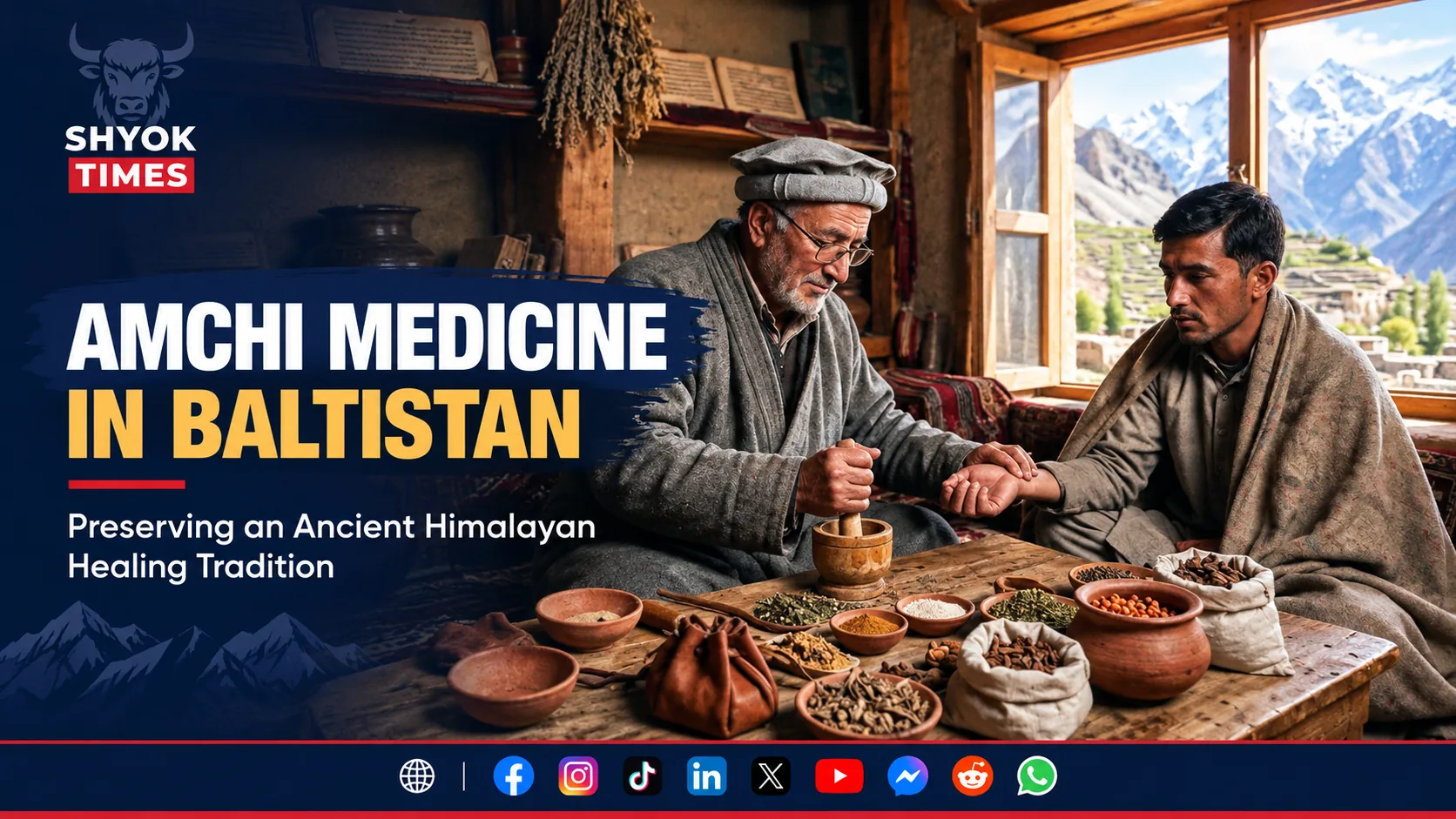
An Amchi is a traditional practitioner whose knowledge may include dietary guidance, the observation of symptoms, medicinal formulations and other methods recognized within the tradition.
Unlike an approach focused exclusively on one symptom, Sowa Rigpa traditionally considers a person's broader condition, including diet, daily habits, surroundings and the relationship between different aspects of wellbeing. Its diagnostic practices may include pulse examination and the assessment of other physical signs.
However, the precise methods used by individual practitioners can vary according to their training, medical lineage and local customs. Practices described by families in Baltistan should therefore be documented on their own terms rather than assumed to represent every part of the wider Sowa Rigpa system.
A Traditional Healing System Rooted in Himalayan Life
For generations, communities across the Himalayas have relied on knowledge passed down through families and local practitioners. In remote areas, where travel to medical facilities could be difficult, local healers sometimes provided an accessible source of advice and care.
Baltistan's mountain geography contributed to the development of distinctive relationships between communities and their natural surroundings. Residents learned to recognize local plants, seasonal changes and environmental conditions through farming, herding, gathering and other daily activities.
Within this setting, traditional medicine was more than a collection of remedies. It was also a body of practical knowledge shaped by experience, cultural beliefs and relationships between generations.
The broader Sowa Rigpa tradition has historically been transmitted through teacher–student relationships, family lineages and established learning practices. UNESCO's documentation of the tradition highlights its cultural role in Himalayan communities and the importance of the people who continue to maintain it.
Although this wider history helps explain the background of Amchi medicine, detailed historical claims about particular Baltistan practitioners, families or treatments require local records and firsthand accounts.
The Importance of Medicinal Plants in Baltistan
One of the most recognizable aspects of traditional Himalayan medicine is its relationship with plants and other naturally occurring materials.
Baltistan's mountain landscapes contain diverse habitats, from river valleys and cultivated land to alpine slopes and high-altitude pastures. Different environmental conditions support different plant communities, some of which may have traditional medicinal uses.
Older practitioners may possess knowledge of how particular plants are identified, when they are collected, which parts are used and how preparations are traditionally made. Such knowledge can be valuable for cultural documentation and ethnobotanical research.
Traditional herbal knowledge may include remedies historically associated with digestive discomfort, seasonal illnesses, aches and general weakness. These descriptions should be understood as reported traditional uses, not proof that a particular plant is effective or safe for a medical condition.
Several questions are essential when evaluating a medicinal plant:
- Has the plant been identified correctly by its scientific name?
- Is its traditional use supported by reliable documentation?
- Which part of the plant is used, and how is it prepared?
- Are its ingredients toxic, contaminated or capable of interacting with medicines?
- Is there credible evidence of safety and effectiveness for the intended use?
These questions matter because a familiar local name may refer to different plant species in different valleys. Similar-looking plants can also have very different chemical properties.
Researchers studying Himalayan Sowa Rigpa medicines have highlighted the importance of botanical identification, ingredient quality and careful assessment of medicinal formulations.
Preserving traditional knowledge must therefore go hand in hand with protecting the region's biodiversity.
How Do Amchi Practitioners Approach Diagnosis and Treatment?
Traditional Sowa Rigpa practice includes methods for assessing a person's condition and considering lifestyle, food and other aspects of daily life. Depending on the practitioner's training, traditional approaches may involve pulse examination, observation of physical signs and recommendations concerning diet and routine.
Traditional medicines may contain plant-derived ingredients and, in some formulations, processed minerals or other substances. Different preparations have different compositions, and their safety cannot be judged simply by whether they are described as natural or traditional.
In Baltistan, some local healing customs are also associated with massage, manual techniques, the application of warmth and the treatment of everyday muscular discomfort. The source account describes these as practices used by some local healers, but their prevalence and precise methods would need to be confirmed through local interviews and documentation.
It is important not to classify every form of massage, bone-setting or household remedy as Sowa Rigpa. Some may belong to separate community traditions that developed alongside it.
Recording these distinctions would help historians, cultural researchers and healthcare professionals build a more accurate picture of Baltistan's traditional medical heritage.
Traditional Knowledge and Modern Scientific Research
Traditional medicine deserves careful study, but cultural longevity alone does not establish that a remedy is effective for a particular disease.
Scientific evaluation can help determine which preparations have promising properties, which require further investigation and which may pose significant risks. It can also identify problems involving inconsistent ingredients, contamination, incorrect plant identification and interactions with prescribed medicines.
Research on Sowa Rigpa formulations illustrates why this work can be complex. Some preparations combine multiple ingredients, making it important to understand not only individual substances but also how the complete formulation is produced and used.
This does not mean that every traditional remedy is ineffective, nor that every traditional claim is established. Each claim needs to be assessed on the evidence available.
The World Health Organization's Global Traditional Medicine Strategy 2025–2034 emphasizes evidence, safety, quality, appropriate use and respect for cultural diversity and biodiversity in traditional and complementary medicine.
For Baltistan, a responsible research programme could bring together experienced Amchi practitioners, botanists, historians, pharmacologists, healthcare professionals and local communities.
Such collaboration could help identify plants accurately, record traditional terminology, assess preparation methods and determine which practices merit further scientific investigation.
Why Preserving Amchi Medicine Matters
The preservation of Amchi medicine is not only a healthcare-related issue. It is also connected to the preservation of language, oral history, traditional knowledge and local identity.
When an experienced practitioner dies without passing on or documenting their knowledge, valuable information may disappear. This can include local plant names, seasonal harvesting practices, historical accounts of treatment and the cultural meanings associated with healing.
The loss may be particularly difficult to reverse when knowledge exists mainly through oral teaching rather than written records.
Several practical measures could help safeguard this heritage.
1. Document the knowledge of senior practitioners. With informed consent, researchers could record interviews, oral histories, traditional terminology and descriptions of practices. Personal medical information and knowledge that communities consider private should be handled respectfully.
2. Create a regional medicinal plant record. Botanists and local knowledge holders could work together to document plant names, scientific identification, habitats, traditional uses and conservation concerns. Such records should avoid encouraging the collection of rare or threatened species.
3. Support younger generations. Educational programmes, supervised apprenticeships and community archives could help younger residents understand the history of Amchi medicine and the importance of responsible knowledge transmission.
4. Encourage research partnerships. Universities and qualified research institutions could investigate botanical identity, preparation standards, toxicity and evidence of effectiveness.
5. Protect the environment. Conservation measures can help maintain the mountain habitats on which traditional plant knowledge depends. Sustainable collection and cultivation may be appropriate for some species, provided their ecological requirements are understood.
6. Record local variations. Different valleys and practitioner families may use different names, methods or formulations. Documentation should preserve these distinctions instead of forcing all local practices into a single category.
Together, these steps could help preserve cultural heritage while creating a more reliable foundation for future research.
Can Amchi Medicine Be Used Alongside Modern Healthcare?
Traditional and modern healthcare do not have to be treated as opposing ideas. Cultural knowledge can be respected while medical decisions remain guided by evidence, appropriate diagnosis and patient safety.
For example, traditional dietary guidance or historical knowledge about local plants may be worth documenting and researching. However, a remedy should not be recommended for a disease simply because it has been used for generations.
People considering traditional medicines should tell their doctors about any herbal products or preparations they use. Some ingredients can cause adverse effects or interact with prescription medicines. Products containing unidentified plants, unverified minerals or improperly prepared substances can be especially risky.
Traditional treatments should never delay urgent medical assessment. Severe injuries, suspected fractures, serious infections, breathing difficulties and other potentially life-threatening symptoms require prompt professional care.
Manual manipulation of an injured limb or joint can also worsen certain injuries if performed without an appropriate assessment.
The safest approach is to respect the cultural value of Amchi medicine while ensuring that any healthcare use is informed by reliable evidence, qualified advice and appropriate safeguards.
Readers can learn more about the wider principles of traditional medicine through the World Health Organization's Traditional, Complementary and Integrative Medicine resources.
The Role of Local Communities in Protecting This Heritage
The future of Amchi traditional medicine in Baltistan will depend significantly on whether local communities see value in documenting and protecting their knowledge.
Community-led initiatives could begin with modest projects: recording interviews with senior practitioners, collecting local plant names, preserving historical photographs and documenting how knowledge was traditionally transmitted.
Local schools, cultural organizations, researchers and community groups could contribute to these efforts. Universities and botanical institutions could help verify plant identities and develop responsible research methods.
It would also be important to recognize the people who hold this knowledge. Traditional practitioners should be involved in decisions about how their experience is recorded, published and used. Their contributions should be acknowledged, and sensitive information should not be shared without permission.
Where traditional knowledge has potential commercial applications, communities should also be included in discussions about consent, attribution and the fair sharing of benefits.
A well-maintained archive could preserve information for future generations without making unsupported claims about medical effectiveness. It could also help researchers understand how traditional knowledge has changed over time and how local practices relate to the wider history of Himalayan medicine.
Amchi Medicine as Part of Baltistan's Cultural Identity
Baltistan's heritage includes its languages, oral traditions, literature, architecture, religious history and distinctive relationship with the surrounding mountains. Traditional healing practices form another part of this cultural landscape.
Amchi medicine represents accumulated knowledge about health, plants, the environment and community life. Its continued study could help younger generations understand how their ancestors approached illness and how knowledge was adapted to local conditions.
The broader Sowa Rigpa tradition is already documented in academic research and international cultural heritage records. These resources provide a starting point for understanding the tradition, but a fuller account of Baltistan's particular practices would benefit from local oral histories and systematic field research.
It is equally important to recognize that traditions are not static. They change as communities encounter new knowledge, environmental pressures and healthcare options. Preserving a tradition does not require every historical practice to remain unchanged; it requires an honest record of its history and a thoughtful approach to its future.
For Baltistan, that means protecting the knowledge of experienced practitioners, supporting research and ensuring that traditional knowledge is neither forgotten nor misrepresented.
Frequently Asked Questions About Amchi Traditional Medicine
What is Amchi medicine in Baltistan?
Amchi medicine refers to traditional healing practices associated with the wider Himalayan Sowa Rigpa tradition, alongside locally developed customs. It includes historical knowledge of medicinal plants, dietary practices and traditional methods of assessing health.
Is Amchi medicine the same as Tibetan medicine?
Amchi medicine is closely associated with Sowa Rigpa, commonly known as Tibetan medicine. However, local practices can differ by community, region and practitioner lineage, so not every traditional healing method in Baltistan should automatically be classified as Sowa Rigpa.
Which medicinal plants are used in traditional Baltistan medicine?
Traditional practitioners may know local plants used in customary remedies, but the exact species, names and applications require careful documentation. Plant identification is essential because similar-looking species can have different properties and levels of toxicity.
Is Amchi medicine scientifically proven?
The evidence varies by preparation and practice. The existence of a long-standing tradition does not establish the safety or effectiveness of every treatment. Specific claims require reliable scientific evaluation, including assessment of potential risks and interactions.
Can Amchi medicine replace modern medical treatment?
It should not be assumed to replace modern healthcare. Serious illness, injuries and emergencies require appropriate professional medical assessment. Anyone using traditional preparations should discuss them with a qualified healthcare professional, particularly when taking prescription medicines.
Why should Amchi medicine be preserved?
Preserving Amchi medicine can protect oral histories, local plant knowledge, traditional terminology and cultural identity. Documentation can also support responsible scientific research and biodiversity conservation.
Conclusion: Protecting an Ancient Tradition Through Knowledge and Research
Amchi traditional medicine in Baltistan is an important part of the region's inherited knowledge and cultural history. Its relationship with Himalayan plants, traditional healing practices and generations of community experience makes it worthy of careful documentation and study.
Preserving this heritage requires more than remembering the names of old remedies. It calls for collaboration with traditional practitioners, accurate botanical records, responsible scientific research, environmental conservation and respect for local communities.
At the same time, cultural preservation must be accompanied by clear medical safeguards. Traditional use should not be confused with proven effectiveness, and no remedy should put patients at risk by delaying necessary treatment.
By bringing together cultural respect, scientific inquiry and community participation, Baltistan can help ensure that the knowledge of its elders remains accessible to future generations.
For Shyok Times News Desk, preserving this heritage means protecting not only a traditional approach to healing, but also the stories, experience and local knowledge that form part of Baltistan's identity.
External Resources (DoFollow):
Follow more on WHO: Traditional, Complementary and Integrative Medicine
Read further at Journal of Ethnopharmacology: Research on Himalayan Sowa Rigpa minerals
Delve deeper into UNESCO: Sowa-Rigpa nomination and cultural heritage documentation
Keep reading via HIMALAYA Journal: Research on Sowa Rigpa formulations and pharmaceutical research