
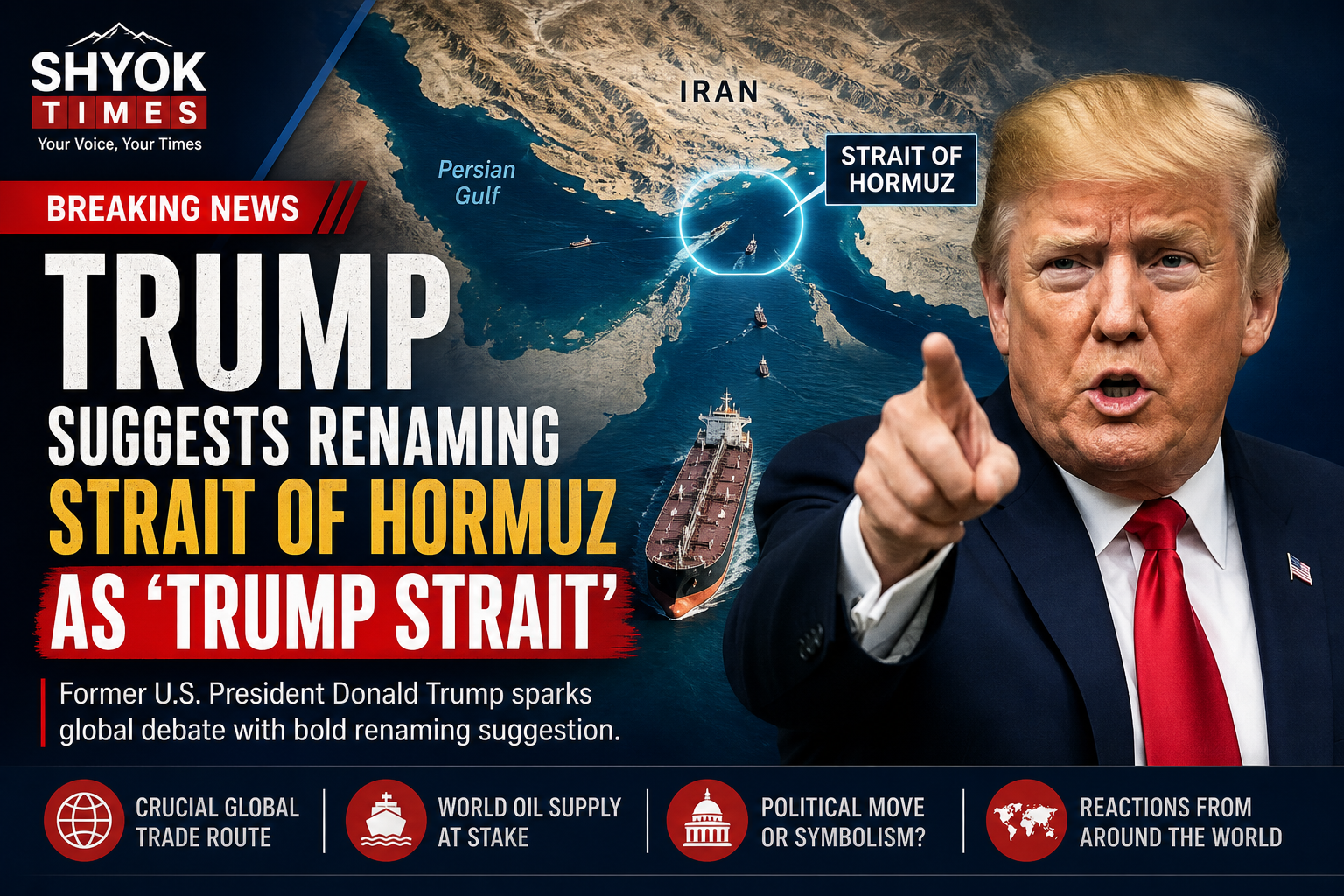
Trump Strait Proposal 2026: Shocking Plan to Rename Strait of Hormuz Sparks Global Tensions
Trump Strait Proposal gains attention as Donald Trump suggests renaming the Strait of Hormuz amid US-Iran tensions and global oil disruption.
Trump Strait Proposal dominates headlines as global tensions rise
Trump Strait Proposal has quickly become one of the most controversial geopolitical ideas of 2026, after former US President Donald Trump suggested renaming the Strait of Hormuz as “Trump Strait.” The proposal comes at a time of heightened military conflict between the United States and Iran, with the strategic waterway already under immense global scrutiny.
The Strait of Hormuz is one of the world’s most critical النفط (oil) transit routes, carrying nearly 20 percent of global oil and gas supplies. Any disruption in this narrow passage between Iran and Oman has immediate consequences for global markets, making the Trump Strait Proposal more than just symbolic—it carries serious economic and political implications.
What is the Trump Strait Proposal?
The Trump Strait Proposal emerged from a statement posted on Trump’s Truth Social platform, where he questioned whether the United States should rename the Strait of Hormuz after claiming control over it. The statement read:
“Now that we have it under USA control, should we change the name Hormuz Strait to TRUMP STRAIT?”
This declaration followed months of escalating tensions and military engagements in the region. The White House further amplified the idea by sharing a map labeling the waterway as “Trump Strait,” adding fuel to global debate.
Strategic importance of the Strait of Hormuz
The Strait of Hormuz connects the Persian Gulf to the Arabian Sea and serves as a lifeline for global energy supplies. Countries including Saudi Arabia, the UAE, Iraq, and Kuwait rely heavily on this route for oil exports.
The Trump Strait Proposal raises serious concerns about international law, as the waterway is not owned by any single nation. Instead, it is governed by international maritime rules that ensure free navigation.
US-Iran conflict and control claims
The Trump Strait Proposal comes amid a six-month-long conflict between the US and Iran. Reports indicate that Iran has effectively restricted access to parts of the strait, while US forces have launched multiple strikes targeting Iranian military infrastructure.
The US Central Command (CENTCOM) confirmed operations targeting radar systems, maritime assets, and missile facilities. Meanwhile, Iran has accused the US of striking civilian areas, further escalating tensions.
The Trump Strait Proposal is closely tied to Trump’s broader claim that the US has “almost total control” over the waterway—an assertion widely disputed by international observers.
A pattern of controversial renaming
The Trump Strait Proposal is not an isolated idea. Since returning to office, Trump has floated several high-profile renaming initiatives, including:
- Renaming the Gulf of Mexico to “Gulf of America”
- Renaming Lake Ontario to “Lake America”
- Reverting Denali to “Mount McKinley”
These moves have largely been rejected by other nations, raising questions about the legitimacy and enforce-ability of such decisions.
It's got a nice ring to it pic.twitter.com/Fmzc9iUu8u
— The White House (@WhiteHouse) September 2, 2026
Impact on global economy
The Trump Strait Proposal is not just political rhetoric—it has real economic consequences. With shipping routes under threat, insurance costs for tankers have risen sharply. Countries dependent on imported oil are already feeling the pressure of increased prices.
Pakistan, like many developing nations, is particularly vulnerable to such shocks. Rising fuel costs directly impact inflation, transportation, and overall economic stability.
Conclusion: Symbolism or serious policy?
The Trump Strait Proposal blurs the line between political messaging and actual policy direction. While some view it as a provocative statement designed to assert dominance, others fear it signals a deeper shift in US foreign policy.
What remains clear is that the Strait of Hormuz will continue to be a focal point of global tension. Whether the name changes or not, the stakes surrounding this narrow waterway are higher than ever.
As the situation unfolds, the world will be watching closely—not just for what the strait is called, but for what happens next.
➡️ (DoFollow) External Link:
For deeper insight into global energy routes, visit: Energy Information Administration
For more read at: Time of Oman/articles