Trump Russia Sanctions: Zelensky Condemns Policy Shift | Shyok Times
Trump Russia Sanctions: Zelensky Warns Putin Could Benefit From US Policy Shift
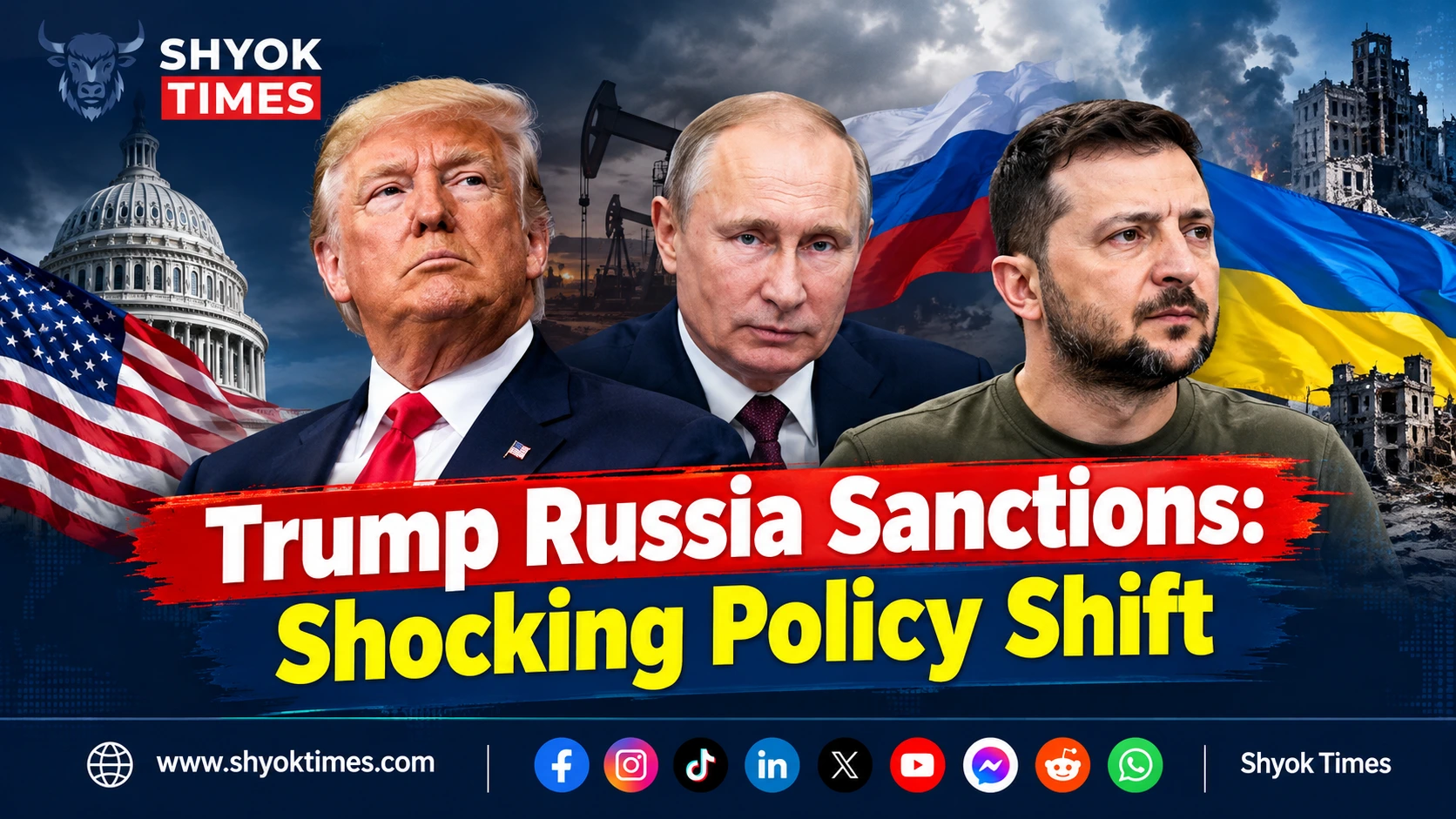
Trump Russia sanctions policy has entered a new phase after US President Donald Trump signed an executive order waiving major provisions of a newly enacted sanctions law targeting Russia and countries that purchase its oil and gas. The decision has triggered a sharp response from Ukrainian President Volodymyr Zelensky, who warned that easing economic pressure on Moscow could encourage Russian President Vladimir Putin to continue the war against Ukraine.
The executive order, signed on October 16, 2026, invoked US national interests to justify the waivers. It came just days before key provisions of the Lindsey O. Graham Sanctioning Russia and Iran Act of 2026 were due to take effect. The legislation had been signed into law in September. The White House order sets out the legal basis for the decision.
Zelensky criticised the move at a time when Russia was intensifying attacks on Ukrainian energy infrastructure ahead of winter. He argued that relaxing sanctions would provide Moscow with economic and political relief when international pressure was intended to discourage further aggression.
The decision has also reignited debate in Washington and Europe over the direction of US policy toward Russia, the future of military support for Ukraine and the economic consequences of continued restrictions on Russian energy exports.
What Did Trump Decide About Russia Sanctions?
Trump's October 16 executive order waived a broad range of sanctions, restrictions and duties authorised under the 2026 Graham Act. The president said the decision was in the national interests of the United States and stated that the required certification had been submitted to Congress.
The law was designed to increase pressure on Russia over its war against Ukraine. Its provisions targeted Russian officials, financial institutions, entities connected to the Russian state and networks used to transport oil outside established sanctions restrictions.
It also established a framework for substantial additional tariffs on goods from countries purchasing Russian oil and natural gas, subject to statutory exceptions and other conditions.
The executive order waived duties under relevant provisions and a wide range of sanctions and restrictions under the legislation. It did not, however, declare every existing US sanction against Russia cancelled.
The distinction matters. Existing measures imposed under earlier executive orders and other legal authorities were not automatically removed by this action. The order explicitly preserved measures established under a separate national-emergency framework.
In practical terms, Trump's decision reduced the immediate effect of the new legislation and gave the administration greater flexibility over the implementation of its provisions.
The move is politically significant because Congress had approved the legislation as a means of increasing pressure on Moscow. The president's use of the law's waiver mechanism has therefore raised questions about how aggressively the administration intends to use economic restrictions to influence Russia's conduct.
Zelensky Calls the Decision a Reward for Putin
Zelensky responded angrily to the sanctions waiver, arguing that the United States was weakening pressure on Russia while Ukrainian cities and energy facilities continued to face attacks.
The Ukrainian president described the move as a benefit to Putin and warned that it could encourage the Russian leadership to prolong the war rather than pursue a settlement.
Zelensky also expressed concern that the latest decision could be followed by additional sanctions relief. He linked that possibility to the recently announced arrangement involving Russian diesel supplies and the wider US effort to reduce energy costs.
His criticism reflects Kyiv's long-standing position that economic pressure on Moscow is an important part of efforts to limit Russia's ability to finance military operations.
For Ukraine, sanctions are not simply a diplomatic instrument. Restrictions on energy revenue, access to financial services and the movement of oil through international markets are intended to raise the economic costs of continuing the war.
However, the White House has defended its authority to make decisions based on US national interests. The executive order does not provide a detailed public explanation of every factor behind the waiver.
That leaves important questions unanswered about the administration's calculations, including the expected impact on fuel prices, the potential economic benefits for Russia and the consequences for negotiations over the war.
Zelensky's statements represent the Ukrainian government's assessment of the decision. Whether the waiver will materially change Russian military calculations or the course of the conflict remains uncertain.
What Is the Graham Act and Why Does It Matter?
The Lindsey O. Graham Sanctioning Russia and Iran Act of 2026 became law on September 18, 2026. It was intended to impose additional economic consequences on Russia and certain parties supporting or facilitating its activities.
The legislation included measures aimed at Russian officials, financial institutions, state-linked entities and vessels associated with efforts to evade existing restrictions. It also established provisions for additional tariffs involving major purchasers of Russian oil and natural gas.
One of its most consequential elements was the framework for imposing tariffs of up to 100% on goods from certain major importers of Russian-origin oil and gas, subject to the law's requirements and exceptions.
Countries such as China and India have been major buyers of Russian energy since Western restrictions and changes in global trade patterns reshaped energy markets following Russia's full-scale invasion of Ukraine in February 2022.
The legislation sought to increase the costs of continuing those purchases under specified circumstances. By potentially affecting trade with major economies, it aimed to put pressure on countries whose energy purchases contribute to Russian export revenues.
However, the law also gave the president authority to waive sanctions, restrictions and duties under specified conditions. The October 16 executive order relied on that authority.
The result is a significant difference between the legislation's original pressure strategy and its immediate implementation. Although Congress enacted the measures, the administration has chosen not to apply several of them at this stage.
For businesses, governments and energy traders, the decision creates uncertainty about the future enforcement of the new provisions. For Ukraine and its European partners, it raises concerns about the consistency of US policy toward Russia.
Russian Energy Revenue at the Centre of the Dispute
Energy exports are central to Russia's economic relationship with international markets. Oil and gas sales provide revenue to the Russian state, while international shipping, insurance, finance and trading networks help move those commodities to buyers.
Western sanctions have sought to restrict Moscow's access to technology, financial services and revenue streams associated with its war effort. Russia has responded by redirecting energy exports, developing alternative commercial relationships and using shipping networks designed to operate around restrictions.
The new US legislation was intended to increase pressure on parts of this system.
Trump's decision to waive key provisions has therefore attracted criticism from people who believe that relaxing restrictions could make it easier for Russia to maintain export earnings.
The administration's approach also reflects a competing concern: high energy costs can affect households, transport operators and businesses. Governments often face pressure to balance foreign-policy objectives against domestic fuel prices and economic conditions.
The central question is whether easing restrictions will produce meaningful benefits for US consumers while limiting the financial advantages available to Russia.
That outcome is not guaranteed. Global fuel prices depend on several factors, including supply, refinery capacity, transport costs, geopolitical risks and market expectations. A change in sanctions policy alone does not determine the price consumers pay at the pump.
The economic effects will also depend on the volume of fuel traded, the terms of commercial arrangements and the response of other energy producers and buyers.
The Controversial Russian Diesel Arrangement
The sanctions dispute intensified after Trump announced an arrangement involving Russian diesel intended to help address energy-price pressures.
The move represented a politically sensitive shift because US policy following Russia's 2022 invasion of Ukraine had sought to limit the country's energy earnings and isolate Moscow economically.
Critics argue that buying Russian fuel while reducing pressure on Russian exports risks undermining the broader sanctions strategy. They also question whether the arrangement can deliver sufficient price relief to justify the diplomatic and strategic costs.
Supporters of a more flexible energy policy may argue that governments must consider domestic affordability and the availability of supplies. Yet the commercial details, scale of any price reduction and long-term implications remain important to evaluating that argument.
The diesel arrangement should be distinguished from the October 16 executive order. The arrangement concerns energy trade and related sanctions relief, while the order addresses waivers under the Graham Act. Together, however, the developments have fuelled concern that Washington may be moving toward a less restrictive approach to Moscow.
For Ukraine, the timing is especially troubling. Kyiv wants its partners to maintain economic pressure while Russia continues its military campaign. Any relaxation of restrictions is therefore viewed through the wider question of whether international support for Ukraine will remain consistent.
Russian Attacks on Ukraine's Energy Infrastructure
The sanctions decision came amid reports of intensified Russian attacks on Ukrainian energy infrastructure. Ukrainian officials said strikes had targeted power facilities as the country prepared for colder weather.
Damage to electricity generation and distribution networks can have consequences far beyond the immediate destruction of equipment. Power shortages can disrupt heating, water supplies, hospitals, communications, public transport and industrial activity.
The risks become particularly serious in winter, when households and public services rely more heavily on reliable electricity and heating.
Ukraine has repeatedly sought international support to protect its energy infrastructure, repair damaged facilities and strengthen air defences. Russian attacks on energy installations have also increased the importance of emergency power systems and cross-border energy cooperation.
Zelensky argued that the timing of the sanctions waiver sent the wrong message while Ukraine was facing continued attacks. His position is that Moscow should face greater economic consequences, not reduced pressure.
The broader impact of the waiver on the conflict is difficult to quantify. Sanctions can influence government revenue, access to technology and commercial relationships, but they operate alongside military developments, domestic economic conditions and diplomatic negotiations.
It is therefore important to separate the immediate political significance of Trump's decision from any conclusion about its eventual effect on Russia's capacity to sustain the war.
Starlink Restrictions Add to Ukraine's Concerns
The sanctions controversy has unfolded alongside a separate dispute concerning Starlink, the satellite internet service used by Ukrainian forces and other users.
Ukrainian officials reported restrictions affecting the operation of military-grade terminals within Ukraine, including limitations that they said interfered with some drone operations. Zelensky questioned why terminals reportedly operated at different speeds in Ukraine and elsewhere in Europe.
The Ukrainian government interpreted the reported differences as evidence that restrictions were being applied geographically. The precise technical circumstances and the reasons for the limitations require careful distinction from the political claims surrounding them.
Satellite communications are important to Ukraine's military operations because they support connectivity in areas where conventional communications infrastructure has been damaged or is unavailable.
Restrictions affecting those systems can therefore raise operational concerns. At the same time, claims about deliberate intent should not be treated as independently established without technical evidence and confirmation from the relevant service provider.
Trump denied deliberately halting intelligence-sharing or slowing the network, according to reports provided in the original account.
The Starlink issue is separate from the legal authority used to waive sanctions under the Graham Act. Nevertheless, both controversies have contributed to wider concerns in Kyiv and European capitals about the reliability of US support.
Growing Tensions Between Trump and Zelensky
Relations between Trump and Zelensky have become increasingly strained over the direction of the war, military assistance, economic policy and the terms of a potential settlement.
Washington has pressed Kyiv to consider steps toward ending the conflict, while Ukraine has argued that any agreement must protect its sovereignty and prevent Russia from launching further attacks.
The disagreement reflects a fundamental difference in priorities. The Trump administration has emphasised its stated interest in securing an end to the war and addressing domestic economic concerns. Ukraine has focused on security guarantees, territorial integrity and maintaining the resources needed to defend itself.
The sanctions waiver has added another point of friction. Zelensky believes that reducing pressure on Russia could weaken incentives for Moscow to negotiate seriously. Critics of the administration's approach similarly argue that economic concessions should be linked to demonstrable changes in Russian behaviour.
The White House's use of the national-interest waiver, however, indicates that the administration is prepared to retain flexibility over the timing and scope of sanctions.
Despite the public disagreement, diplomatic contacts between the two governments remain important. Any potential negotiations would have to address not only the fighting itself but also security arrangements, economic restrictions and the role of European countries in supporting a durable settlement.
Why Europe Is Watching Washington Closely
European governments have strong reasons to monitor changes in US policy. Many European countries view Russia's war against Ukraine as a direct challenge to European security and have contributed military, financial and humanitarian assistance to Kyiv.
A change in US sanctions policy could affect coordination among Western governments, the enforcement of restrictions on Russian energy and the expectations of international businesses.
If Washington applies less economic pressure, European governments could face renewed debate over whether to maintain existing measures, strengthen their own restrictions or seek a more coordinated diplomatic strategy.
Zelensky has called for Europe to take a more active role in engaging with Moscow. Such discussions would involve difficult questions about negotiation terms, security guarantees and the relationship between diplomacy and continued military support.
European governments do not necessarily share identical views on energy policy, defence spending or the best route to ending the war. However, the US decision adds urgency to discussions about Europe's capacity to sustain assistance to Ukraine if American policy changes further.
The future of sanctions will depend on decisions by individual governments, the implementation of existing laws and any subsequent diplomatic developments. The October 16 order alone does not establish what every US or European measure will look like in the months ahead.
What Happens Next?
The immediate issue is how the Trump administration will apply the waivers and whether it will take further steps affecting Russian energy trade and financial restrictions.
The executive order states that the waivers will remain in effect until the president or designated officials determine that further action is appropriate. This creates scope for future policy changes, although the timing and form of any such changes remain uncertain.
Congressional scrutiny is another important factor. Lawmakers who supported the Graham Act may challenge the administration's approach, seek further explanations or pursue legislative responses. The effectiveness of any response will depend on the applicable legal procedures and political support.
Ukraine and its European partners will also continue to assess how US policy affects their security planning and diplomatic options.
For energy markets, the central questions include whether Russian fuel trade expands, how other buyers respond and whether any resulting changes influence prices. For the war itself, the consequences will depend on a much wider range of military, economic and political developments.
At present, the clearest fact is that Trump has used authority under the Graham Act to waive key sanctions provisions and duties, citing US national interests. Zelensky has condemned the decision, warning that it could benefit Putin and weaken pressure on Moscow.
Whether the move ultimately contributes to lower energy costs, changes Russia's calculations or complicates efforts to end the war will become clearer only as its effects emerge.
Frequently Asked Questions
Why did Trump waive the new Russia sanctions?
Trump's October 16, 2026, executive order cited the national interests of the United States as the basis for waiving specified sanctions, restrictions and duties under the Graham Act. The order did not provide a detailed public explanation of every consideration behind the decision.
What is the Graham Act?
The Lindsey O. Graham Sanctioning Russia and Iran Act of 2026 is a US law signed on September 18, 2026. It provides for sanctions against specified Russian officials, financial institutions and other entities, alongside duties and restrictions targeting certain trade involving Russian energy.
What was Zelensky's response?
Zelensky criticised the waiver, arguing that reducing economic pressure on Russia could encourage Putin to continue the war. He called for the sanctions framework to be implemented effectively.
Does Trump's decision remove all US sanctions against Russia?
No. The executive order waives specified provisions of the Graham Act. It expressly preserves measures imposed under a separate national-emergency framework, so the decision should not be described as cancelling every US sanction against Russia.
How could the decision affect Ukraine?
Critics warn that reduced economic pressure could benefit Russia's revenue and weaken a tool intended to discourage continued aggression. The actual effect will depend on implementation, energy trade and wider developments in the conflict.
Could the decision affect global fuel prices?
Potentially, but the outcome is uncertain. Fuel prices depend on global supply and demand, refining capacity, shipping costs, geopolitical risks and other market conditions. The sanctions waiver alone does not establish that consumers will see lower prices.
Conclusion
Trump's decision to waive major provisions of the new Russia sanctions law marks a significant shift in the immediate implementation of US policy toward Moscow. It has drawn sharp criticism from Zelensky, who fears that reduced economic pressure could strengthen Putin's position as Russia continues its war against Ukraine.
The controversy also highlights the competing pressures shaping Washington's approach: domestic energy costs, diplomatic ambitions, relations with European allies and the goal of ending the conflict.
The next phase will depend on how the administration implements its order, how Congress responds and whether the policy produces measurable economic or diplomatic results.
For Ukraine, the central concern remains whether international pressure on Russia will be sustained strongly enough to support its security and a lasting peace.
Reporting note: This article reflects information available through October 17, 2026.
External Resources (DoFollow):
Follow more on CNN: Trump waives Russia-related sanctions as Ukraine ties worsen
Read further at BBC: Trump waives several Russia sanctions as row with Zelensky intensifies
Keep reading via The Guardian: Trump’s pause on Russia sanctions is ‘reward’ for Putin, Zelenskyy